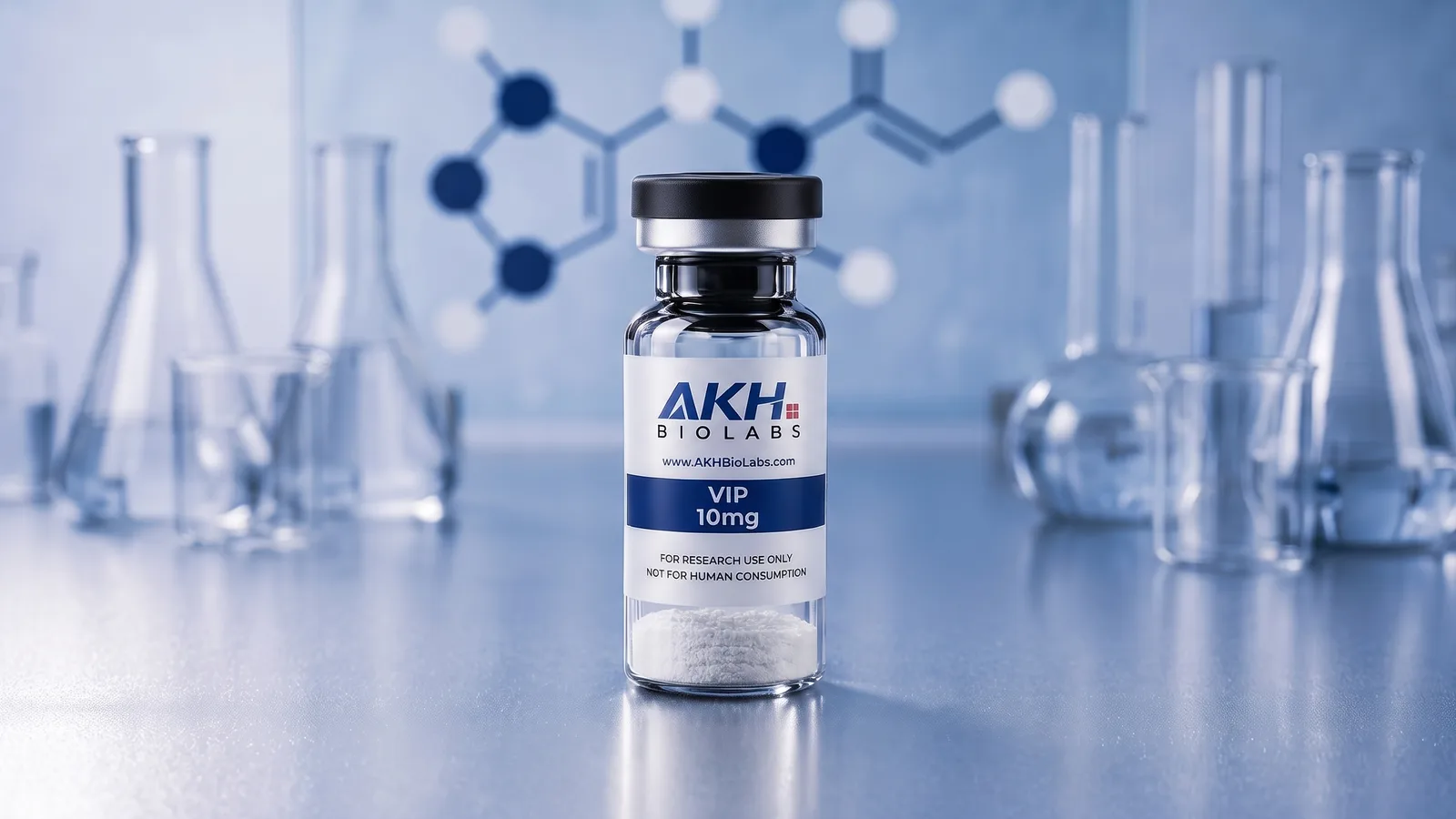
Buy vip: what to check before ordering
A buyer's checklist for the VIP listing: the public checks that answer where to buy vip for research, what the product page lists for size and purity, why a 99.91% purity figure is not a fill quantity, and where the compound evidence record sits.
A buy vip decision for laboratory research settles on four public facts rather than on a compound name: the size and purity listed on the product page, the Full COA entry shown there, a worldwide delivery window, and a public review record read with its count. The size and purity fields, the worldwide delivery window, the review count and the Full COA entry can be read on the VIP 10mg page at VIP 10mg.
This article is written for laboratory buyers comparing research-use-only listings, and it applies those checks to one product rather than describing them in the abstract. It covers what each check verifies, how the VIP identity and certificate fields read, why a purity figure and a fill figure answer different questions, and where the compound evidence record sits. The material is supplied for laboratory research only, and the listing states that it is not for human consumption, diagnosis, treatment or prevention of any condition.
Key takeaways
- A certificate that names the product, the batch, the test date and the issuing laboratory is the document a listing can be held to; a purity percentage on its own is not.
- The VIP listing states a 10mg fill and a 99.91% purity figure, and those two numbers describe different quantities.
- Delivery scope and a review count are commercial facts, readable before payment, and neither speaks to identity.
- The published literature belongs to a separate evidence record, and no product page substitutes for it.
Where to buy vip for research: the four checks that decide it
The checks are the same on any listing. What differs is whether a seller publishes them, and a page that shows none of the four has answered the question by omission.
A certificate for that exact product
The document has to name the product and come from a named laboratory outside the seller. A certificate issued for a different product, or one that names no issuing laboratory, cannot be checked against the container. The AKH BioLabs product page for VIP shows a Full COA entry.
The identity and purity that report states
Identity fields say what the material is meant to be: the compound name and, where given, identifiers such as a CAS number. The results line says what was measured. Both are needed, because a purity percentage without a compound name matches nothing, and a compound name without a measurement says nothing about a batch.
Delivery to the destination country
A stated scope and window can be read before payment. AKH states worldwide delivery in 9 to 14 days, which is a shipping term rather than a quality claim.
A public review record with its count
The VIP page displays 4.7 from 29 reviews. The count matters as much as the score, because a rating without a count gives no sense of how many orders sit behind it, and neither figure describes the material in a vial.
What the VIP identity record states
The product page describes VIP as a 28-amino-acid neuropeptide of the secretin/glucagon family, produced in the gut, pancreas and brain. The research record adds the identifiers used to check a name against a compound, CAS 40077-57-4 and PubChem CID 16132300, notes that the synthetic form is aviptadil, and gives a free-base molecular weight of 3326.8 g/mol.
The listing states a 10mg size and a purity of 99.91%, marked HPLC verified on the page. Those are listing fields, and they are the ones to match against a report: if the certificate names a different compound or a different fill, the listing and the document describe different material.
Reading the published VIP certificate
The product page for this listing gives the product name VIP, the size 10mg and the purity 99.91%. The product name, the batch number, the test date and the issuing laboratory do more work than the rest, because the batch number is what ties the document to a container. A report whose batch does not match the vial describes different material even where the purity figure matches.
The product page carries a Full COA entry rather than a certificate from a named laboratory. No certificate text is shown there, and the testing question on the page has no answer.
Purity, fill and peptide mass are three different figures
Two figures sit close together on a peptide listing and answer two questions. The 99.91% purity figure is a chromatographic result, the share of detected material sitting in the target peak on that analysis. The 10mg figure is the stated fill for the presentation. Neither one states how much peptide, by mass, the vial holds.
The research record explains the gap: lyophilised peptide is normally supplied as an acetate or trifluoroacetate salt and carries residual water, so the mass of powder is not the same quantity the molecular weight suggests, and chromatographic purity does not resolve the difference. Net peptide content is the measurement that would, and no such figure appears in the retrieved page text for this product.
Where the compound evidence sits, and what a listing cannot settle
Nothing on a product page settles what the published literature shows, and a batch certificate does not either. That record sits on a separate page: the VIP research record lists 40 published studies, 10 of them since 2023, with the newest dated 2026, and orders the entries by strength of study design.
One paper cited in the sources below reviews nanostructured systems built either to deliver VIP or to target it, and describes neuropeptides such as VIP as difficult to develop because of poor metabolic stability and reduced biological activity intervals. That is a statement about a research problem, not a claim about a vial.
A buyer is better served by keeping the two questions apart: the listing answers what is in the parcel and who measured it, while the evidence record answers what has been studied. Treating one as the other produces claims that neither document supports.
Before ordering: the sequence that settles the decision
The checks work best in a fixed order: the certificate before the commercial terms, the batch number before the purity figure, and the delivery scope before payment. The listing fields sit on one page, where VIP 10mg gives the product name, the size and purity, the worldwide delivery window and the review count. The price is shown there too, and it is the last field to read rather than the first.
- 01
Match the compound and the fill
The certificate and the listing should name the same product and the same stated fill. The listing side reads VIP at 10mg.
- 02
Match the batch number
The batch on the report is the reference point to compare with the batch on the material. No batch number is stated on the product page.
- 03
Read the results line for what it is
A purity ratio and a stated fill, not a net peptide content figure. The two numbers describe different quantities and should not be quoted as one.
- 04
Confirm the delivery scope
AKH states worldwide delivery in 9 to 14 days. A scope and window can be checked before payment; a vague promise cannot.
- 05
Read the review count as a service record
4.7 from 29 reviews describes past orders. It cannot be checked against a laboratory report, and it is not a batch measurement.
Common questions.
- Is vip peptide for sale as a research material or as a medicine?
As a research material. The AKH BioLabs listing supplies VIP in a 10mg presentation for laboratory research and states that it is not for human consumption, diagnosis, treatment or prevention of any condition. A certificate published for a batch documents a measurement, and it does not change that intended-use statement or confer an approval.
- Which fields make a VIP certificate checkable before payment?
The product name, the batch number, the test date, the issuing laboratory and the results line. On the product page, the available fields read VIP, 10mg and 99.91% purity. A document missing the batch or the laboratory cannot be tied to a container.
- Does the VIP listing state a net peptide content figure?
No. The retrieved page text gives a 10mg size and a 99.91% purity figure with no net peptide content figure beside them. Those two fields describe the presentation and a chromatographic measurement, so a buyer recording the quantity question should mark it unanswered rather than combine the two numbers.
- How can delivery to a destination country be checked before ordering VIP?
By reading a stated scope rather than a vague promise. AKH states worldwide delivery in 9 to 14 days, which gives a window to plan around and a scope that covers destinations outside the origin country. It is a commercial term, so it says nothing about identity or purity and belongs beside the certificate check.
- What does the batch number on a VIP report link to?
It links the document to a specific lot of material. The product page does not state a batch number or an issuing laboratory. A report whose batch number differs from the batch on the material describes different material, even when the compound name and the purity figure are identical.