What is SS-31 peptide used for?
The question what is SS-31 peptide used for has three separate answers, and none of them is an intended human use: a published research context, a research-use-only supply category and a batch certificate.
What is SS-31 peptide used for? In published research it is a mitochondria-targeted tetrapeptide studied for cardiolipin binding and mitochondrial membrane function, and on a supplier page it is a research-use-only material rather than a stated human use.
This explainer is for laboratory buyers, research writers and catalogue readers who need to separate a research context from a supply listing and a batch report. It answers the query in three senses and directs study detail to the SS-31 research record rather than restating the literature here.
Key takeaways
- The research sense of used for describes what published studies examined, not what a vial is for.
- A research-use-only (RUO) listing is a supply category and documentation route; it is not a medical claim.
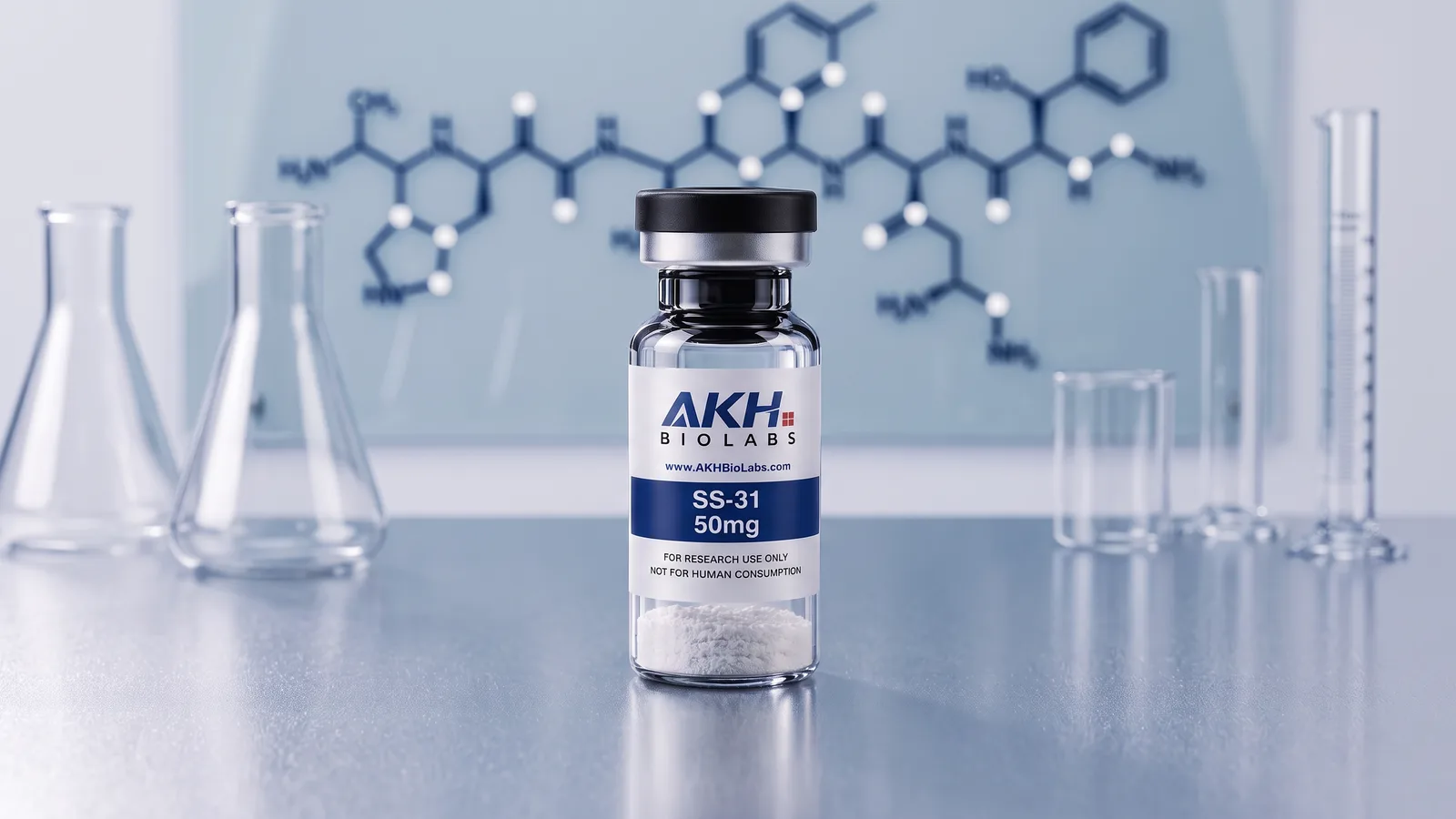
- The SS-31 product page states that the material is for research purposes only and not for human consumption, diagnosis, treatment or prevention of any condition.
- The published certificate for batch 26080, tested 31 Jul 2026 by the Brown Institute of Biomolecular Research, carries the results string 'SS-31: 50mg | Purity: 99.82%'.
- A certificate reports measurements for one batch and does not state an intended use or a study conclusion.
Three questions behind one phrase
The phrase used for can point at a study, a listing or a document. In a research record it asks what has been examined in published work. On a supplier page it asks what category of material is supplied and under what intended-use wording. On a certificate it asks what a named laboratory measured for a specific batch. Those are different questions with different evidence, and treating one as an answer to another is where overreading starts.
None of the three is a statement that SS-31 is appropriate for a particular person or condition. The research record describes study designs and limits; the product page sets the supply category; the certificate reports measurements for one batch.
The research sense: what studies examine
The SS-31 research record describes elamipretide as a mitochondria-targeted tetrapeptide that binds cardiolipin in the inner mitochondrial membrane. That is a research identity, not a claim about what a buyer should expect from a vial.
The record lists 16 published studies, 11 of them from 2023 onward, with study designs and stated limitations. It also carries the regulatory status and the evidence limits, which belong to that record rather than to this supply-focused explainer.
Study detail belongs at the SS-31 research record, which lists the papers and the limits. This post does not re-summarise those studies or turn them into an intended use.
What a research-use-only listing means
On a supplier page, the question what is ss 31 used for is answered by the intended-use wording, not by the compound name. A research-use-only listing is a supply category for material intended for laboratory work. It is not a prescription, a medical claim or a statement that the material is fit for human use.
The SS-31 product page states: 'For research purposes only. Not for human consumption, diagnosis, treatment, or prevention of any condition.' It also places the compound in a catalogue category named Performance. That category is a navigation label, not a statement of effect, and it does not change the intended-use wording.
The listing's practical purpose is to identify the material, the product record and the documentation available for a batch. The page links the certificate and the research record, which is the useful part for a laboratory reader.
What batch 26080's certificate documents
A certificate of analysis (COA) is a test report for a specific batch. The published SS-31 certificate covers batch 26080, tested 31 Jul 2026 by the Brown Institute of Biomolecular Research. The results line reads exactly: 'SS-31: 50mg | Purity: 99.82%'. The product page records the same 99.82% purity figure and task ID #1812376.
The certificate is a report from a named laboratory outside AKH, ordered by the manufacturer and shown exactly as the laboratory issued it. It documents measurements for that batch. It does not state an intended use, and it is not a study result.
A purity figure is not a statement of peptide quantity. Published work on synthetic peptide quality describes identity, purity and strength as separate analytical questions (Reference Standards to Support Quality of Synthetic Peptide Therapeutics). The SS-31 research record makes the same point for lyophilised material: a salt form and residual water mean the powder mass is not the same as the peptide mass, and chromatographic purity, a ratio taken from the chromatography trace, does not resolve that difference.
How a used-for claim is checked
A claim about what SS-31 is used for becomes checkable when the document behind it is named. The checklist below keeps the three senses apart.
- 01
The document is named
A research paper, a product listing and a certificate answer different questions; a claim that does not name one cannot be checked against the others.
- 02
The batch fields are matched
For batch documentation, the batch number, test date, laboratory name and results string belong to one report, not to the product line as a whole.
- 03
The intended-use wording is read
The RUO line is the intended-use statement; the Performance label is catalogue navigation. A category label does not turn a research material into a medical product.
- 04
Study questions go to the evidence record
The SS-31 research record lists the published studies and limitations, so a question about study findings belongs there rather than on the certificate.
Common questions.
- Is SS-31 peptide used for mitochondrial research?
The research record describes SS-31 as a mitochondria-targeted tetrapeptide studied for cardiolipin binding and mitochondrial membrane function. That is a description of the research context, not a statement that a vial has a human use. The record lists the published studies and their limits at /research/ss-31.
- Does an SS-31 certificate state what the compound is used for?
No. The certificate reports measurements for one batch. For batch 26080 it records the results string 'SS-31: 50mg | Purity: 99.82%', tested 31 Jul 2026 by the Brown Institute of Biomolecular Research. Intended use comes from the product page, not the certificate.
- What does the 99.82% purity figure on the SS-31 certificate measure?
It is a chromatographic purity result for batch 26080. It is not a statement that 99.82% of the vial mass is SS-31: the research record notes that salt form and residual water mean powder mass differs from peptide mass, and that chromatographic purity does not resolve the difference.
- Why does the SS-31 product page say not for human consumption?
Because the page is a research-use-only listing. It states: 'For research purposes only. Not for human consumption, diagnosis, treatment, or prevention of any condition.' That is an intended-use statement for the material, not a comment on study findings or a statement that a certificate is a medical approval.