Premium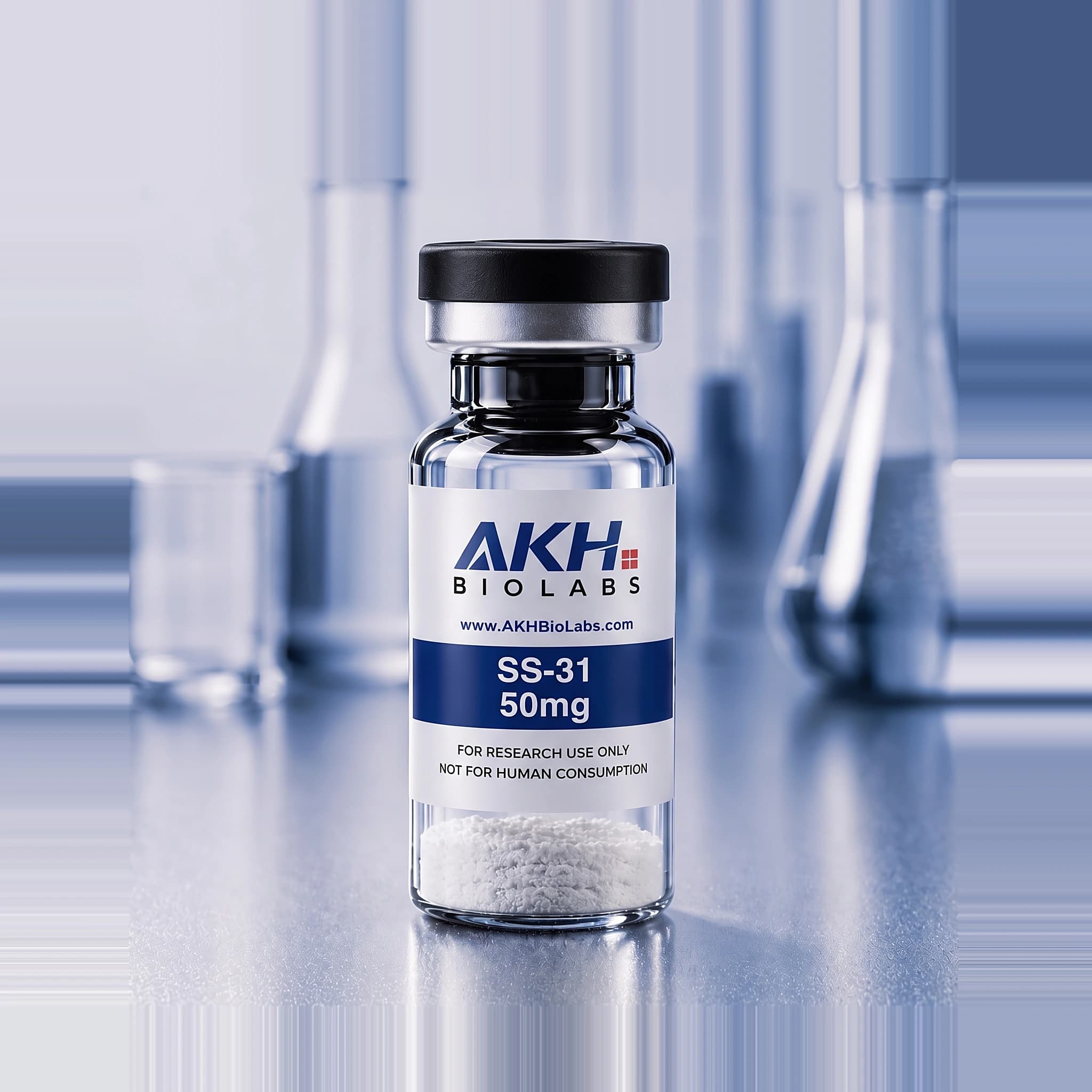
Performance· Premium
In stockSS-31
Elamipretide
Size50mgPurity99.82%FormulaC32H49N9O5
SS-31 (elamipretide, also called Bendavia or MTP-131) is a synthetic four-amino-acid peptide that selectively concentrates in the inner mitochondrial membrane by binding cardiolipin, the signature lipid of healthy mitochondria. It is researched for cristae stabilisation, electron-transport-chain efficiency, ATP production and reduction of reactive oxygen species in cardiac, neurodegenerative and ageing models.
€95
Quantity
HPLC verified
9–14 day shipping
Full COA
Worldwide delivery
About this compound
The research profile.
SS-31, also known as elamipretide, is a mitochondria-targeted tetrapeptide built on the Szeto-Schiller alternating aromatic-cationic motif. That structure allows it to cross cell membranes without a transporter and to concentrate in the inner mitochondrial membrane, where it reaches concentrations far above those in the cytosol.
Its molecular target is cardiolipin, the signature anionic phospholipid of the inner membrane. Published mechanistic work describes selective binding to cardiolipin through combined electrostatic and hydrophobic interactions, which stabilises cristae curvature, supports electron transport through cytochrome c, and suppresses the peroxidase activity that cardiolipin-bound cytochrome c otherwise acquires. Earlier characterisations framed the peptide as a mitochondrial antioxidant; the current literature treats the cardiolipin interaction and the resulting membrane-electrostatic changes as the primary mechanism.
The compound has progressed further clinically than most peptides in this category, with randomised trials in primary mitochondrial myopathy and other mitochondrial disorders providing published human pharmacokinetic and tolerability data. It remains an investigational compound and is not an approved medicine.
Published research
16 peer-reviewed studies on SS-31 are summarised in our research library, including 11 published since 2023 — with study designs, reported findings and what the evidence does not establish.
Read the SS-31 evidence baseFor research purposes only. Not for human consumption, diagnosis, treatment, or prevention of any condition.
Categorised as Performance — Mitochondrial and cellular-energy research compounds.
Dosing at a glance
What the literature reports.
For research and laboratory use only. Not for human consumption.
Route
Subcutaneous
Frequency
Once daily (trial protocols)
Reported range
20–40 mg
Protocol duration
4–12 weeks
20 mgper administration40 mg
Clinical trials in primary mitochondrial myopathy investigated daily subcutaneous administration in the region of 40 mg, following an earlier dose-escalation stage that examined lower amounts. Preclinical work is reported per kilogram of bodyweight. Figures describe published trial protocols.
Ranges reflect protocols reported in the published literature on SS-31 — see research citations.
Calculate a dilutionReconstitution & storage
From powder to solution.
- Step 01
Add 2 ml bacteriostatic water
Aim the stream at the vial wall rather than the powder.
- Step 02
Swirl gently — never shake
Rotate the vial until the solution runs clear. Agitation degrades the peptide.
- Step 03
Refrigerate at 2–8 °C
Reconstituted vials belong in the fridge, protected from direct light.
- Step 04
Use within 28 days
Discard any remainder once the stability window closes.
Lyophilised · −20 °CReconstituted · 2–8 °C, 28 days
A 50 mg vial in 2 ml gives 25 mg/ml, keeping a 20–40 mg research aliquot within a workable syringe volume. Larger volumes suit laboratories preferring a more dilute working solution.
Reconstitution calculator
50 mg vialmg
ml
mg
20 mg = 20000 mcg
Draw
80units · U-100 insulin syringe
- Concentration
- 25 mg/ml
- Draws per vial
- 2
- Cost per draw
- €47.50
For research and laboratory use only. Not for human consumption.
Laboratory arithmetic for SS-31 — enter the COA-verified vial content for exact figures. Not medical advice.
Effect timeline
Observed across the research window.
Milestones summarise findings reported in the cited studies. Outcomes vary across models and protocols.
Start
Mitochondrial uptake and cardiolipin binding
Mechanistic studies describe rapid concentration of the peptide in the inner mitochondrial membrane and binding to cardiolipin, with improvements in ATP synthesis reported in ischaemic mitochondria within minutes to hours.
Week 1–2
Cristae remodelling
Ultrastructural work in aged and injured tissue reports restoration of cristae architecture and mitochondrial morphology over the first days to weeks of repeated administration.
Week 4
Functional measures in trials
The randomised dose-escalation trial in primary mitochondrial myopathy assessed six-minute walk distance and related functional end points across sequential dosing stages.
Week 12
Protocol end points
Longer trial and preclinical protocols conclude in the 4–12 week window, where treated and control groups are compared on bioenergetic and functional measures.
For research and laboratory use only. Not for human consumption.
Scientific research
The published evidence.
The dosing ranges and timeline milestones on this page summarise the peer-reviewed publications below.
References
- 01
First-in-class cardiolipin-protective compound as a therapeutic agent to restore mitochondrial bioenergetics. Br J Pharmacol (2014). PubMed · 24117165
- 02
The mitochondrial-targeted compound SS-31 re-energizes ischemic mitochondria by interacting with cardiolipin. J Am Soc Nephrol (2013). PubMed · 23813215
- 03
Cardiolipin-targeted peptides rejuvenate mitochondrial function, remodel mitochondria, and promote tissue regeneration during aging. Arch Biochem Biophys (2018). PubMed · 30359579
- 04
Randomized dose-escalation trial of elamipretide in adults with primary mitochondrial myopathy. Neurology (2018). PubMed · 29500292
Laboratory verification
One Certificate, published unaltered.
The Certificate is a test report from a named laboratory outside AKH, ordered by our manufacturer and shown here exactly as the laboratory issued it. A printed copy ships in every parcel.
- Batch
- 26080
- Test date
- 31 Jul 2026
- Task ID
- #1812376
- Purity
- 99.82%
Results
SS-31: 50mg | Purity: 99.82%
Verified by Brown Institute of Biomolecular Research. Scan the full report for every measurement.
Product FAQ
Questions researchers ask.
Pairs well with
Frequently co-studied.
Compounds that appear alongside SS-31 in the research literature.
For research and laboratory use only. Not for human consumption.
Performance