AKH Signature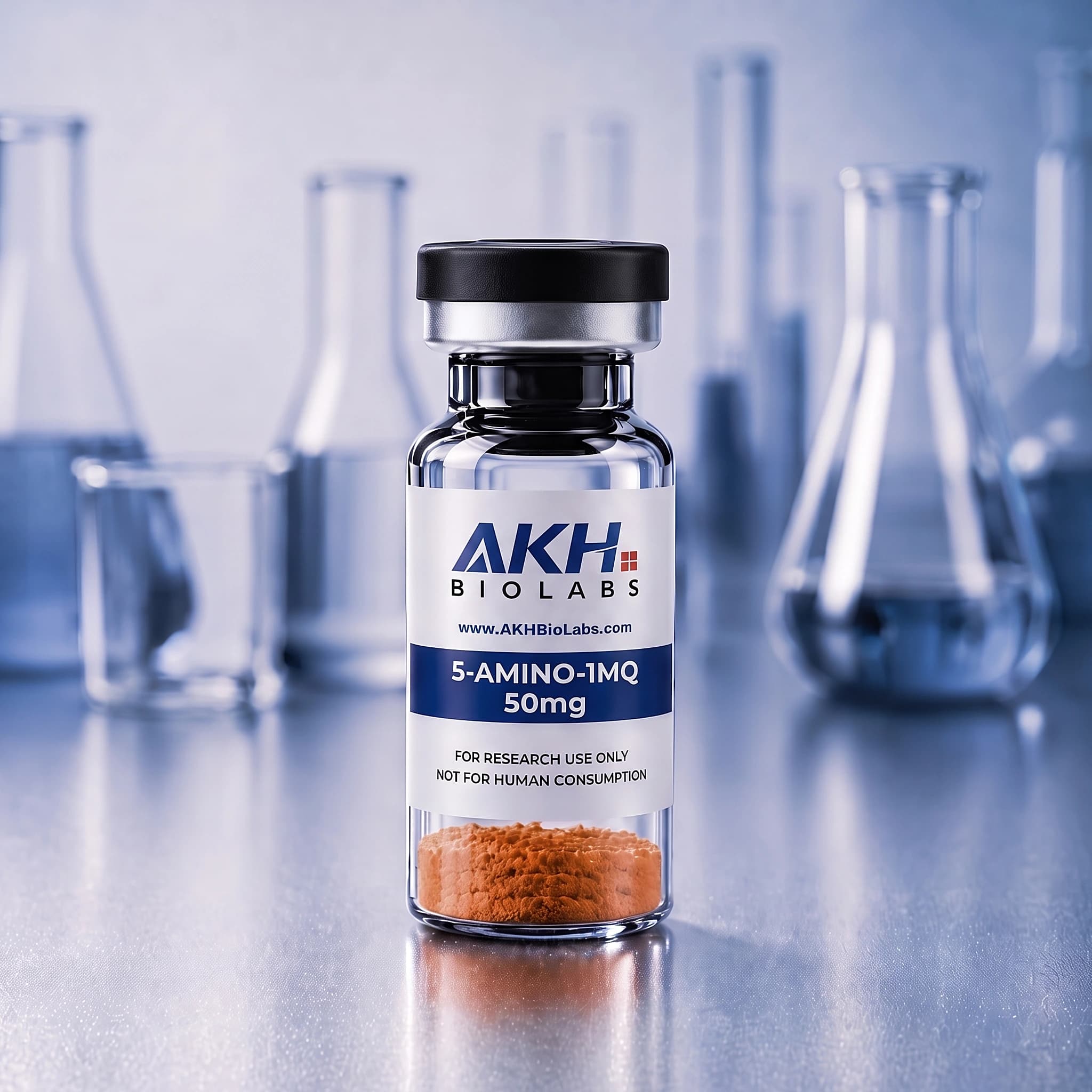
Metabolic· AKH Signature
In stock5-Amino-1mq
5-Amino-1-Methylquinolinium
5-Amino-1MQ is supplied as 50mg lyophilised powder for laboratory research. Price is shown in your currency, and its Certificate from a named outside laboratory is published on this page. Not for human or veterinary use.
Size
10mg€6050mg€90
Purity99.85%FormulaC10H11IN2
5-Amino-1mq is a small-molecule selective inhibitor of nicotinamide N-methyltransferase (NNMT), an enzyme highly expressed in adipose tissue that consumes methyl donors and influences NAD+ availability. By blocking NNMT in preclinical models, it is studied for effects on NAD+ salvage, adipocyte differentiation and whole-body energy expenditure.
€90
Quantity
HPLC verified
9–14 day shipping
Full COA
Worldwide delivery
About this compound
The research profile.
5-Amino-1MQ (5-amino-1-methylquinolinium) is a small-molecule inhibitor of nicotinamide N-methyltransferase (NNMT) — not a peptide. NNMT transfers a methyl group from S-adenosylmethionine (SAM) onto nicotinamide, producing 1-methylnicotinamide and consuming both a methyl donor and a precursor of the NAD+ salvage pathway. The enzyme is highly expressed in adipose tissue and liver, and the cited review literature describes it as a regulatory node connecting methylation status to cellular NAD+ metabolism.
Interest in the target traces to genetic work in which antisense-oligonucleotide knockdown of NNMT in mice altered adipose SAM and NAD+ availability and changed the metabolic phenotype of animals on high-fat diets. 5-Amino-1MQ emerged from a medicinal-chemistry programme seeking membrane-permeable, selective small-molecule inhibitors of the same enzyme; the characterisation papers report target engagement in cellular assays, reduced 1-methylnicotinamide production, and shifts in NAD+ and SAM levels in treated tissue.
In the preclinical protocols, the compound was dosed orally in rodents on a per-kg basis over multi-week high-fat-diet studies, with metabolic endpoints compared against vehicle-treated controls. The vials supplied here contain the lyophilised compound for laboratory work on NNMT enzymology and NAD+ pathway biology; all reported findings are from cell and animal models.
Published research
15 peer-reviewed studies on 5-Amino-1MQ are summarised in our research library, including 8 published since 2023 — with study designs, reported findings and what the evidence does not establish.
Read the 5-Amino-1MQ evidence baseFor research purposes only. Not for human consumption, diagnosis, treatment, or prevention of any condition.
Categorised as Metabolic — GLP-1 and GIP receptor agonists for metabolic research.
Dosing at a glance
What the literature reports.
For research and laboratory use only. Not for human consumption.
Route
Oral
Frequency
Once daily
Reported range
50–150 mg
Protocol duration
3–8 weeks (animal studies)
50 mgper day (preclinical protocols, scaled from per-kg animal dosing)150 mg
The published work is preclinical and dosed orally in rodents on a per-kg basis; the range shown reflects total daily amounts commonly examined in research settings. No human dosing literature exists for this compound.
Ranges reflect protocols reported in the published literature on 5-Amino-1MQ — see research citations.
Calculate a dilutionReconstitution & storage
From powder to solution.
- Step 01
Add 3 ml bacteriostatic water
Aim the stream at the vial wall rather than the powder.
- Step 02
Swirl gently — never shake
Rotate the vial until the solution runs clear. Agitation degrades the peptide.
- Step 03
Refrigerate at 2–8 °C
Reconstituted vials belong in the fridge, protected from direct light.
- Step 04
Use within 30 days
Discard any remainder once the stability window closes.
Lyophilised · −20 °CReconstituted · 2–8 °C, 30 days
Reconstitution calculator
50 mg vialmg
ml
mg
2.5 mg = 2500 mcg
Draw
15units · U-100 insulin syringe
- Concentration
- 16.67 mg/ml
- Draws per vial
- 20
- Cost per draw
- €4.50
For research and laboratory use only. Not for human consumption.
Laboratory arithmetic for 5-Amino-1mq — enter the COA-verified vial content for exact figures. Not medical advice.
Effect timeline
Observed across the research window.
Milestones summarise findings reported in the cited studies. Outcomes vary across models and protocols.
Start
Enzyme inhibition in cellular assays
The characterisation studies report NNMT inhibition and reduced 1-methylnicotinamide production in cell-based assays as the compound's primary, direct activity.
Week 2–3
Metabolite shifts in treated tissue
Changes in adipose SAM and NAD+ availability — the biochemical signature first described in the genetic knockdown work — are reported in tissue from treated animals during multi-week protocols.
Week 8
Study endpoints
The high-fat-diet rodent protocols conclude with endpoint comparisons between treated and vehicle groups on the metabolic measures defined in the study designs.
For research and laboratory use only. Not for human consumption.
Scientific research
The published evidence.
The dosing ranges and timeline milestones on this page summarise the peer-reviewed publications below.
References
- 01
Nicotinamide N-methyltransferase knockdown protects against diet-induced obesity. Nature (2014). PubMed · 24717514
- 02
Nicotinamide N-Methyltransferase: More Than a Vitamin B3 Clearance Enzyme. Trends Endocrinol Metab (2017). PubMed · 28291578
- 03
Selective and membrane-permeable small molecule inhibitors of nicotinamide N-methyltransferase reverse high fat diet-induced obesity in mice. Biochem Pharmacol (2018). PubMed · 29155147
Laboratory verification
One Certificate, published unaltered.
The Certificate is a test report from a named laboratory outside AKH, ordered by our manufacturer and shown here exactly as the laboratory issued it. A printed copy ships in every parcel.
- Batch
- 26165
- Test date
- 13 Aug 2026
- Task ID
- #1812461
- Purity
- 99.85%
Results
5-Amino-1MQ: 50mg | Purity: 99.85%
Verified by Brown Institute of Biomolecular Research. Scan the full report for every measurement.
Product FAQ
Questions researchers ask.
Pairs well with
Frequently co-studied.
Compounds that appear alongside 5-Amino-1mq in the research literature.
For research and laboratory use only. Not for human consumption.
Metabolic