Popular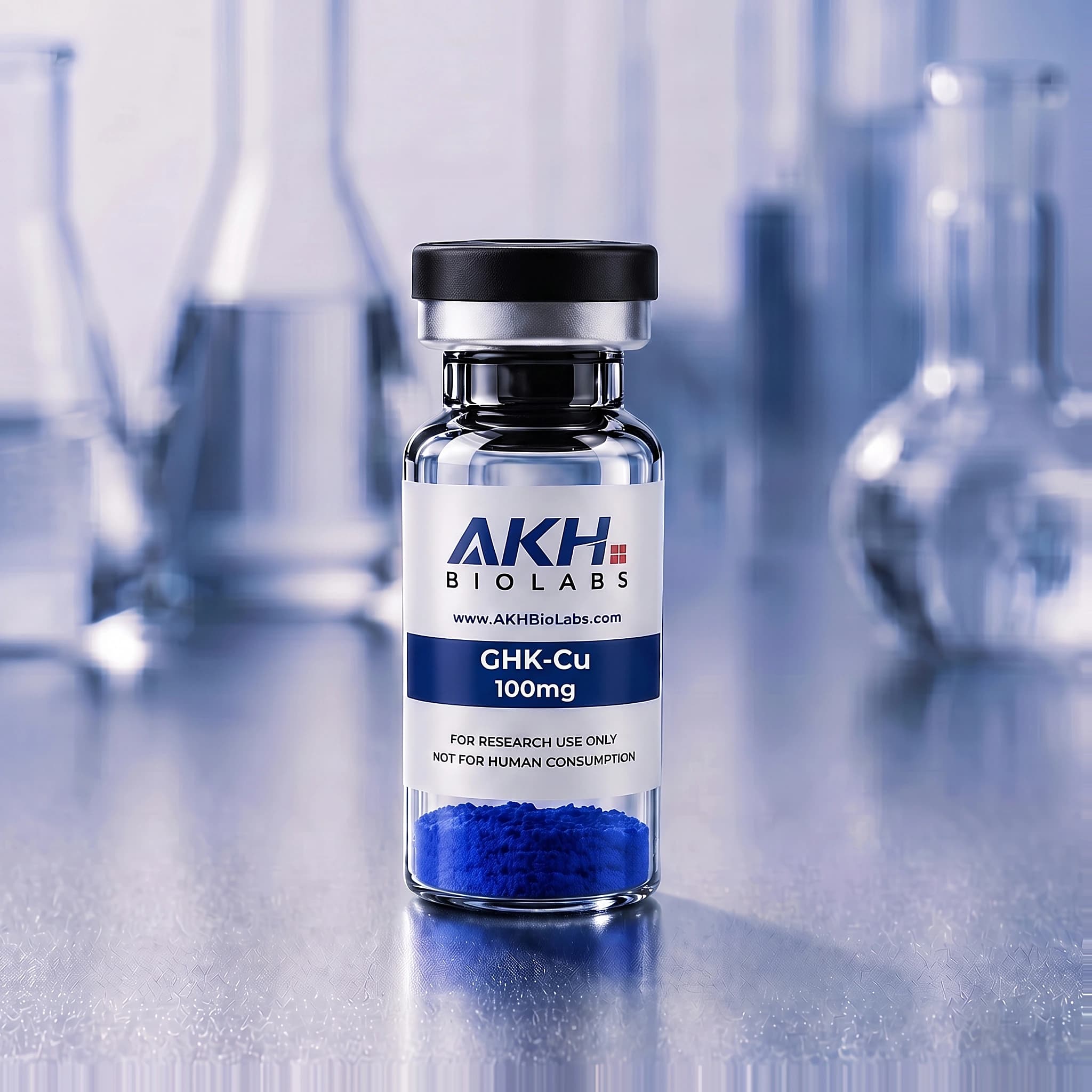
Skin· Popular
In stockGHK-cu
Copper Peptide GHK-Cu
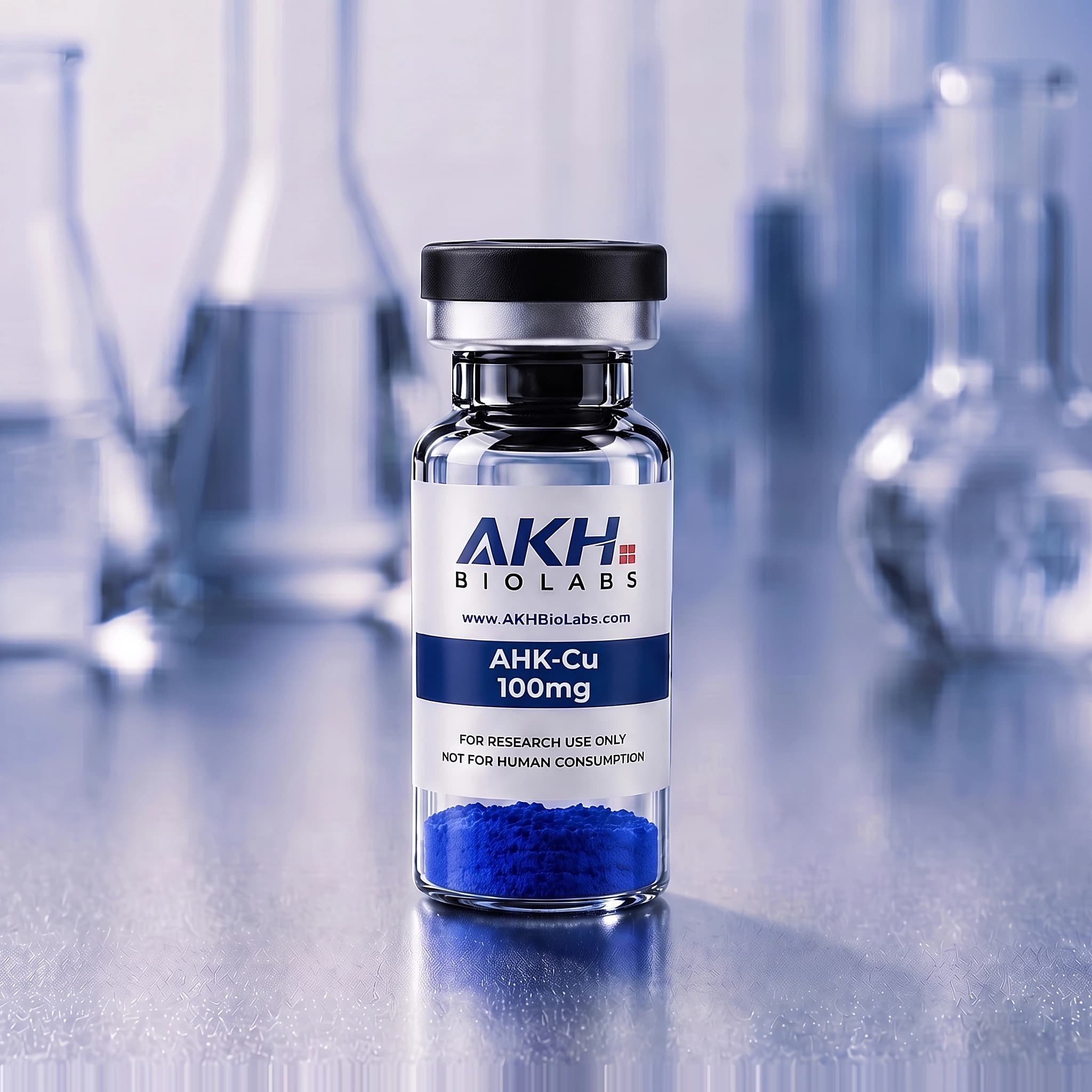
GHK-Cu is supplied as 100mg lyophilised powder for laboratory research. Price is shown in your currency, and its Certificate from a named outside laboratory is published on this page. Not for human or veterinary use.
Size100mgPurity99.64%FormulaC14H24CuN6O4
GHK-Cu is a naturally occurring complex of the tripeptide glycyl-L-histidyl-L-lysine bound to a copper(II) ion, first isolated from human plasma albumin in 1973 by Dr Loren Pickart. Plasma concentrations decline from roughly 200 ng/mL in young adults to under 80 ng/mL after age 60. It is widely studied for stimulating collagen and glycosaminoglycan synthesis and modulating extracellular matrix remodelling in skin and hair-follicle models.
€60
Quantity
HPLC verified
9–14 day shipping
Full COA
Worldwide delivery
About this compound
The research profile.
GHK-Cu is the copper(II) complex of glycyl-L-histidyl-L-lysine, a tripeptide first isolated from human plasma. Its concentration in plasma declines markedly with age, an observation that anchored decades of research into its role in tissue remodelling. In fibroblast cultures the complex stimulates collagen synthesis, and later work extended this to glycosaminoglycan production and the balanced expression of matrix metalloproteinases and their inhibitors — the enzymatic machinery that both builds and clears extracellular matrix.
Gene-profiling studies attribute a remarkably broad transcriptional footprint to GHK and its copper complex, with reported influence over genes involved in tissue repair, antioxidant defence, and cellular signalling. Mechanistic work suggests the peptide acts partly as a copper chaperone — delivering Cu(II) to cells in a bioavailable form — and partly through direct receptor-level and gene-modulatory activity that is still being characterised.
In irradiated and normal fibroblast models, copper tripeptide exposure altered growth-factor secretion, including basic FGF and VEGF output, which is one of the mechanisms proposed for the wound-model findings reported across the copper-peptide literature. The 100 mg vial format reflects the milligram-scale amounts used in laboratory work with this compound.
Published research
15 peer-reviewed studies on GHK-Cu are summarised in our research library, including 10 published since 2023 — with study designs, reported findings and what the evidence does not establish.
Read the GHK-Cu evidence baseFor research purposes only. Not for human consumption, diagnosis, treatment, or prevention of any condition.
Categorised as Skin — Copper peptides and compounds for dermal research.
Scientific research
The published evidence.
The peer-reviewed publications below characterise GHK-cu across discovery, pharmacology, and clinical development.
References
- 01
Regenerative and Protective Actions of the GHK-Cu Peptide in the Light of the New Gene Data. Int J Mol Sci (2018). PubMed · 29986520
- 02
GHK Peptide as a Natural Modulator of Multiple Cellular Pathways in Skin Regeneration. Biomed Res Int (2015). PubMed · 26236730
- 03
Stimulation of collagen synthesis in fibroblast cultures by the tripeptide-copper complex glycyl-L-histidyl-L-lysine-Cu2+. FEBS Lett (1988). PubMed · 3169264
- 04
The tripeptide-copper complex glycyl-L-histidyl-L-lysine-Cu2+ stimulates matrix metalloproteinase-2 expression by fibroblast cultures. Life Sci (2000). PubMed · 11045606
- 05
Effects of copper tripeptide on the growth and expression of growth factors by normal and irradiated fibroblasts. Arch Facial Plast Surg (2005). PubMed · 15655171
Laboratory verification
One Certificate, published unaltered.
The Certificate is a test report from a named laboratory outside AKH, ordered by our manufacturer and shown here exactly as the laboratory issued it. A printed copy ships in every parcel.
- Batch
- 26155
- Test date
- 03 Aug 2026
- Task ID
- #1812451
- Purity
- 99.64%
Results
GHK-CU: 100mg | Purity: 99.64%
Verified by Brown Institute of Biomolecular Research. Scan the full report for every measurement.
Product FAQ
Questions researchers ask.
Pairs well with
Frequently co-studied.
Compounds that appear alongside GHK-cu in the research literature.
For research and laboratory use only. Not for human consumption.
Skin