Bestseller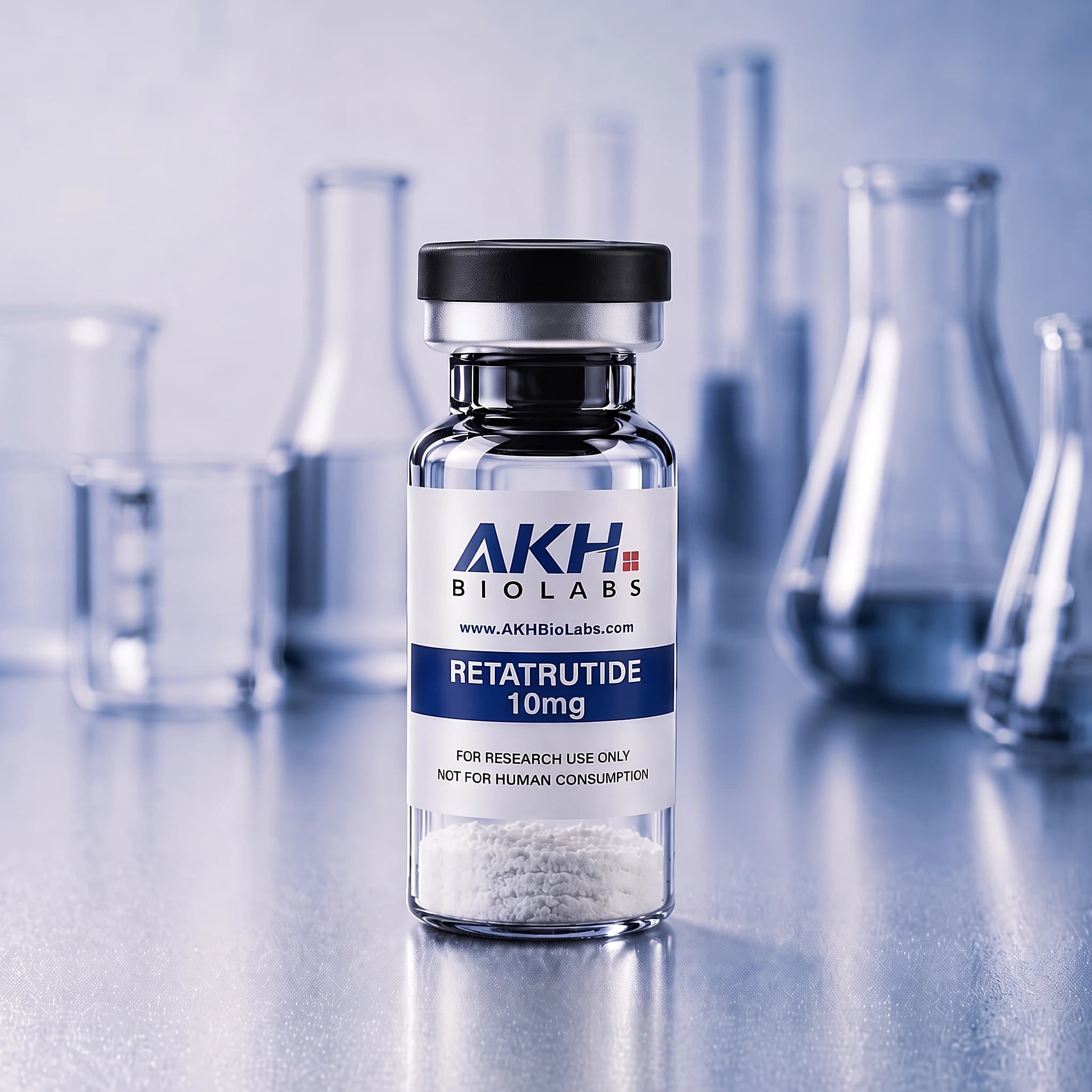
Metabolic· Bestseller
In stockRetatrutide
GIP/GLP-1/Glucagon Triple Agonist
Retatrutide, often searched as GLP-3 or “reta”, supplied as 10mg lyophilised powder for in-vitro and laboratory research. Price is shown in your currency, and its Certificate from a named outside laboratory is published on this page. Not for human or veterinary use.
Size
10mg€6730mg€183
Purity99.74%FormulaC112H164N26O31
Retatrutide (LY3437943) is an investigational single-molecule peptide that simultaneously activates three metabolic receptors: GLP-1, GIP and glucagon. It is currently in Phase 3 trials under Eli Lilly's TRIUMPH programme. Supplied strictly for laboratory research use only.
€67
Quantity
HPLC verified
9–14 day shipping
Full COA
Worldwide delivery
About this compound
The research profile.
Retatrutide (LY3437943) is an investigational single-molecule peptide engineered on a GIP backbone with agonist activity at three metabolic receptors: the glucose-dependent insulinotropic polypeptide (GIP) receptor, the glucagon-like peptide-1 (GLP-1) receptor, and the glucagon receptor. This triple-receptor pharmacology distinguishes it from single (GLP-1) and dual (GIP/GLP-1) agonists described in earlier literature.
Receptor-level studies characterise retatrutide as an imbalanced agonist: its potency at the GIP receptor exceeds its potency at the GLP-1 and glucagon receptors relative to the native ligands. The molecule is acylated with a C20 fatty-diacid moiety, which supports albumin binding and the extended half-life reported in pharmacokinetic work.
The compound is in active clinical development, with phase 1 and phase 2 programmes published in the peer-reviewed literature and phase 3 trials ongoing. It remains an investigational compound and is not an approved medicine.
Published research
15 peer-reviewed studies on Retatrutide are summarised in our research library, including 13 published since 2023 — with study designs, reported findings and what the evidence does not establish.
Read the Retatrutide evidence baseFor research purposes only. Not for human consumption, diagnosis, treatment, or prevention of any condition.
Categorised as Metabolic — GLP-1 and GIP receptor agonists for metabolic research.
Scientific research
The published evidence.
AKH BioLabs does not publish preparation or dosing guidance for this compound class. The peer-reviewed literature below is the definitive reference for study design.
The peer-reviewed publications below characterise Retatrutide across discovery, pharmacology, and clinical development.
References
- 01
LY3437943, a novel triple glucagon, GIP, and GLP-1 receptor agonist for glycemic control and weight loss: From discovery to clinical proof of concept. Cell Metab (2022). PubMed · 36055487
- 02
Triple-Hormone-Receptor Agonist Retatrutide for Obesity — A Phase 2 Trial. N Engl J Med (2023). PubMed · 37366315
- 03
Retatrutide, a GIP, GLP-1 and glucagon receptor agonist, for people with type 2 diabetes: a randomised, double-blind, placebo and active-controlled, parallel-group, phase 2 trial. Lancet (2023). PubMed · 37385280
Laboratory verification
One Certificate, published unaltered.
The Certificate is a test report from a named laboratory outside AKH, ordered by our manufacturer and shown here exactly as the laboratory issued it. A printed copy ships in every parcel.
- Batch
- 26136
- Test date
- 08 Aug 2026
- Task ID
- #1812432
- Purity
- 99.74%
Results
RT: 10mg | Purity: 99.74%
Verified by Brown Institute of Biomolecular Research. Scan the full report for every measurement.
Product FAQ
Questions researchers ask.
From the blog
Further reading.
- Research notes
What is GLP-3 R? Is reta a GLP-3?
GLP-3 R is an informal market label for retatrutide, the investigational triple agonist of the GIP, GLP-1 and glucagon receptors. No receptor called GLP-3 appears in the published literature, so the name describes a product alias rather than a pharmacological class.
Read the post - Industry & regulatory
HCG research chemical: what the term means
The phrase hcg research chemical describes a catalogue category and an intended use, not a purity or identity claim. What the label does and does not assert, for HCG and for retatrutide.
Read the post - Research notes
What is retatrutide used for, and how does it compare with tirzepatide?
Retatrutide is an investigational triple agonist studied in metabolic research, not an approved medicine. What the published record covers, how it differs from tirzepatide, and why the two are not interchangeable.
Read the post
Metabolic