Bestseller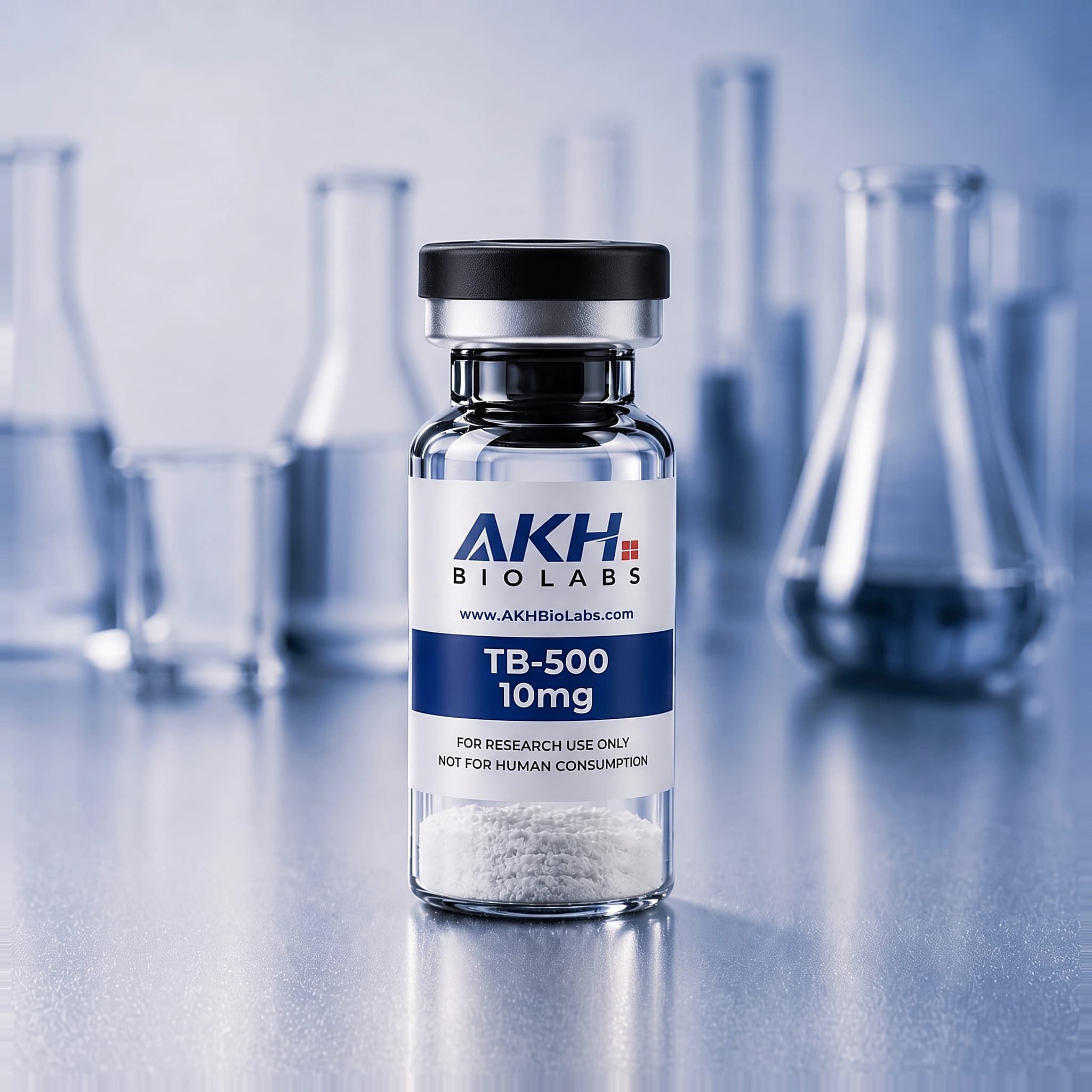
Recovery· Bestseller
In stockTB-500
Thymosin Beta-4 Acetate
TB-500, thymosin beta-4 acetate, is supplied as 10mg lyophilised powder for laboratory research. Price is shown in your currency, and its Certificate from a named outside laboratory is published on this page. Not for human or veterinary use.
Size10mgPurity99.85%FormulaC212H350N56O78S
TB-500 is a synthetic fragment of Thymosin Beta-4, a naturally occurring actin-binding protein found in almost every human cell. In laboratory models it is investigated for its role in cellular migration, angiogenesis and wound repair, and it is frequently paired with BPC-157 in connective-tissue recovery research.
€55
Quantity
HPLC verified
9–14 day shipping
Full COA
Worldwide delivery
About this compound
The research profile.
TB-500 is the synthetic form of thymosin beta-4 chemistry used in tissue-repair research. Thymosin beta-4 is the principal G-actin sequestering peptide in mammalian cells, and the short actin-binding motif at its centre (LKKTETQ) accounts for much of the activity described in the published models. Because the parent molecule is a 43-amino-acid peptide, research literature distinguishes between full-length thymosin beta-4 preparations and shorter actin-binding fragments — a distinction worth noting when comparing study protocols.
Preclinical work reports that thymosin beta-4 influences actin polymerisation, cell migration, and angiogenesis. Dermal wound models describe accelerated re-epithelialisation, increased collagen deposition, and new vessel formation relative to saline controls, while cardiac work characterises a complex formed with PINCH and integrin-linked kinase that activates Akt signalling and supports cell survival after ischaemic injury.
Review literature frames thymosin beta-4 as a "moonlighting" protein: an intracellular actin buffer that, once released extracellularly, participates in repair signalling across dermal, corneal, cardiac, and neural tissue models. A phase 1 programme in healthy volunteers has characterised the intravenous pharmacokinetics and tolerability of synthetic thymosin beta-4.
Published research
15 peer-reviewed studies on TB-500 are summarised in our research library, including 8 published since 2023 — with study designs, reported findings and what the evidence does not establish.
Read the TB-500 evidence baseFor research purposes only. Not for human consumption, diagnosis, treatment, or prevention of any condition.
Categorised as Recovery — Peptides studied in tissue-repair and inflammation models.
Dosing at a glance
What the literature reports.
For research and laboratory use only. Not for human consumption.
Route
Subcutaneous
Frequency
2x weekly (loading phase in study protocols)
Reported range
2–2.5 mg
Protocol duration
4–6 weeks
2 mgper administration2.5 mg
Subcutaneous · Once weekly (maintenance phase in study protocols) · 2–2.5 mg per administration · 4–8 weeks after the loading phase
Animal studies report thymosin beta-4 on a per-kilogram basis rather than as fixed vial amounts — micrograms per wound in dermal models and low milligram-per-kilogram intraperitoneal amounts in cardiac work. The phase 1 volunteer programme characterised intravenous amounts far above the figures shown here, so the 2–2.5 mg per-administration range describes laboratory protocol convention for a 10 mg vial rather than any clinical dose.
Ranges reflect protocols reported in the published literature on TB-500 — see research citations.
Calculate a dilutionReconstitution & storage
From powder to solution.
- Step 01
Add 2 ml bacteriostatic water
Aim the stream at the vial wall rather than the powder.
- Step 02
Swirl gently — never shake
Rotate the vial until the solution runs clear. Agitation degrades the peptide.
- Step 03
Refrigerate at 2–8 °C
Reconstituted vials belong in the fridge, protected from direct light.
- Step 04
Use within 28 days
Discard any remainder once the stability window closes.
Lyophilised · −20 °CReconstituted · 2–8 °C, 28 days
Reconstituted solution is kept refrigerated at 2–8 °C and protected from light; sealed lyophilised vials are stored at -20 °C.
Reconstitution calculator
10 mg vialmg
ml
mg
2 mg = 2000 mcg
Draw
40units · U-100 insulin syringe
- Concentration
- 5 mg/ml
- Draws per vial
- 5
- Cost per draw
- €11.00
For research and laboratory use only. Not for human consumption.
Laboratory arithmetic for TB-500 — enter the COA-verified vial content for exact figures. Not medical advice.
Effect timeline
Observed across the research window.
Milestones summarise findings reported in the cited studies. Outcomes vary across models and protocols.
Start
Actin binding and cell migration
In vitro and early in vivo work reports G-actin sequestration and increased keratinocyte and endothelial cell migration within the first days of exposure.
Week 1
Re-epithelialisation and angiogenesis
Dermal wound models describe increased re-epithelialisation and new vessel formation over the first week relative to saline-treated controls.
Week 4
Structural and functional measures
Cardiac injury studies report upregulated integrin-linked kinase and Akt activity together with functional measures assessed several weeks after treatment began.
Week 6
Protocol end points
Most published protocols conclude in the 4–6 week window, where treated and control groups are compared; the human phase 1 programme dosed daily for 14 days and followed tolerability beyond that point.
For research and laboratory use only. Not for human consumption.
Scientific research
The published evidence.
The dosing ranges and timeline milestones on this page summarise the peer-reviewed publications below.
References
- 01
Thymosin beta4 accelerates wound healing. J Invest Dermatol (1999). PubMed · 10469335
- 02
Thymosin beta4 activates integrin-linked kinase and promotes cardiac cell migration, survival and cardiac repair. Nature (2004). PubMed · 15565145
- 03
Thymosin beta4: actin-sequestering protein moonlights to repair injured tissues. Trends Mol Med (2005). PubMed · 16099219
- 04
A randomized, placebo-controlled, single and multiple dose study of intravenous thymosin beta4 in healthy volunteers. Ann N Y Acad Sci (2010). PubMed · 20536472
Laboratory verification
One Certificate, published unaltered.
The Certificate is a test report from a named laboratory outside AKH, ordered by our manufacturer and shown here exactly as the laboratory issued it. A printed copy ships in every parcel.
- Batch
- 26147
- Test date
- 26 Jul 2026
- Task ID
- #1812443
- Purity
- 99.85%
Results
TB-500: 10mg | Purity: 99.85%
Verified by Brown Institute of Biomolecular Research. Scan the full report for every measurement.
Product FAQ
Questions researchers ask.
Pairs well with
Frequently co-studied.
Compounds that appear alongside TB-500 in the research literature.
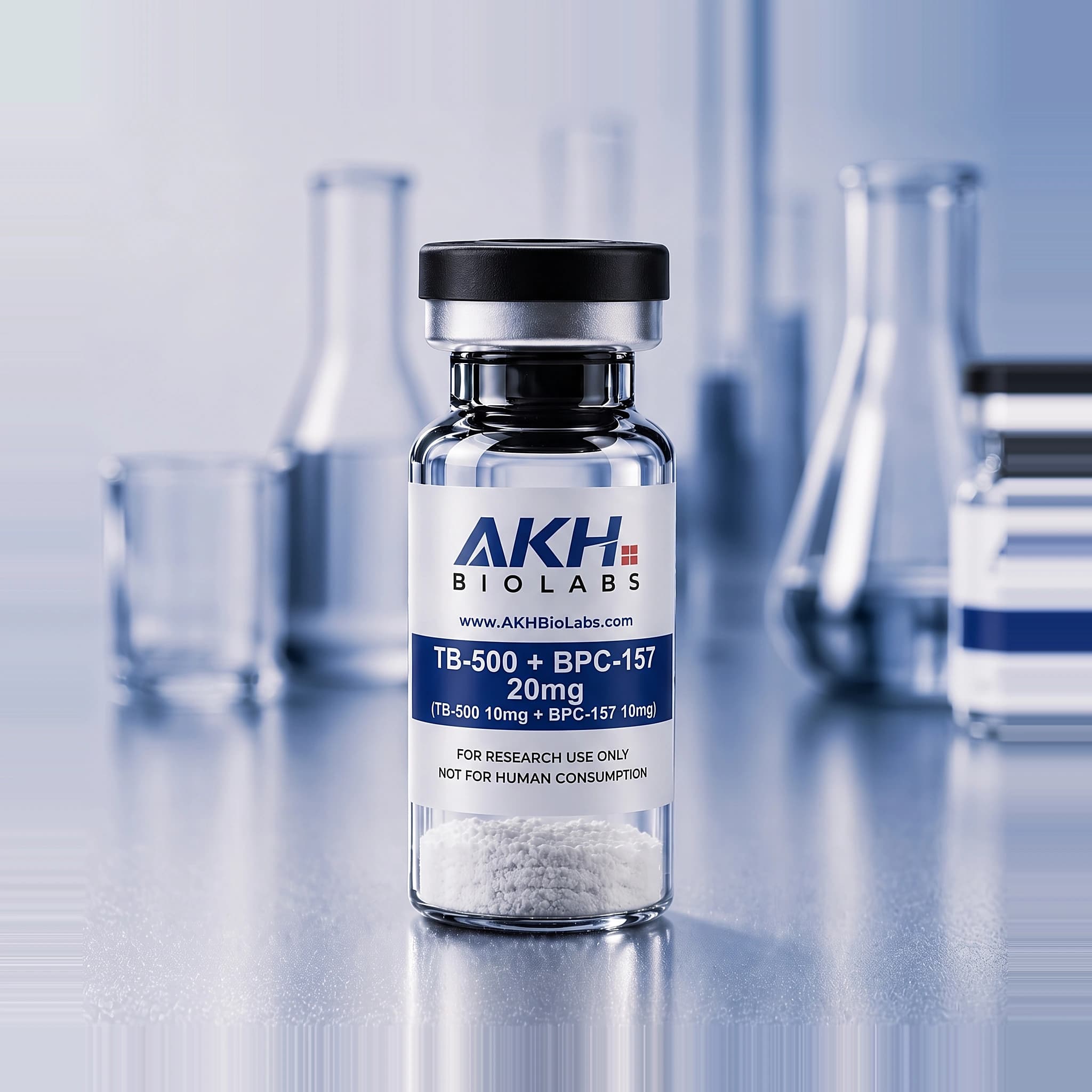
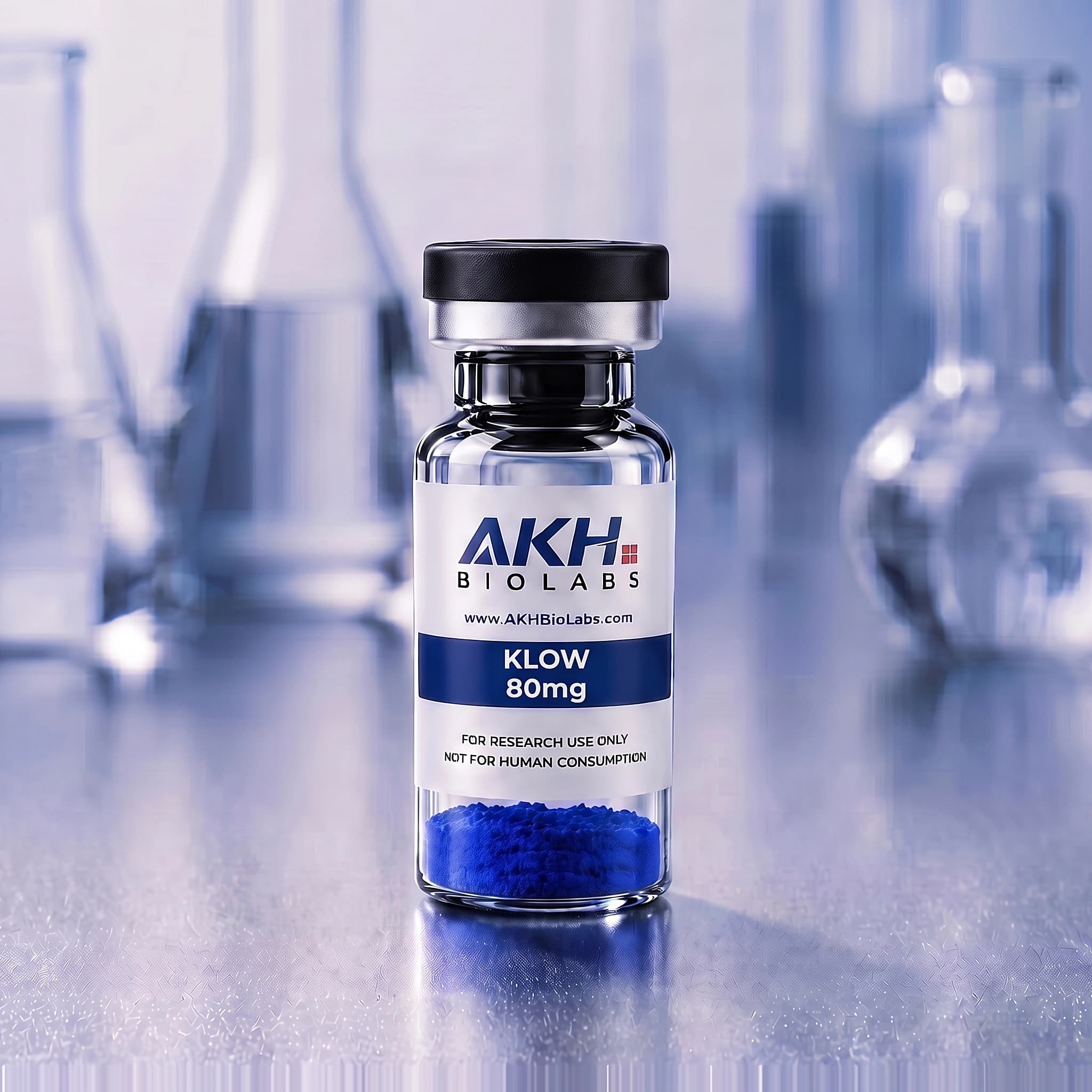
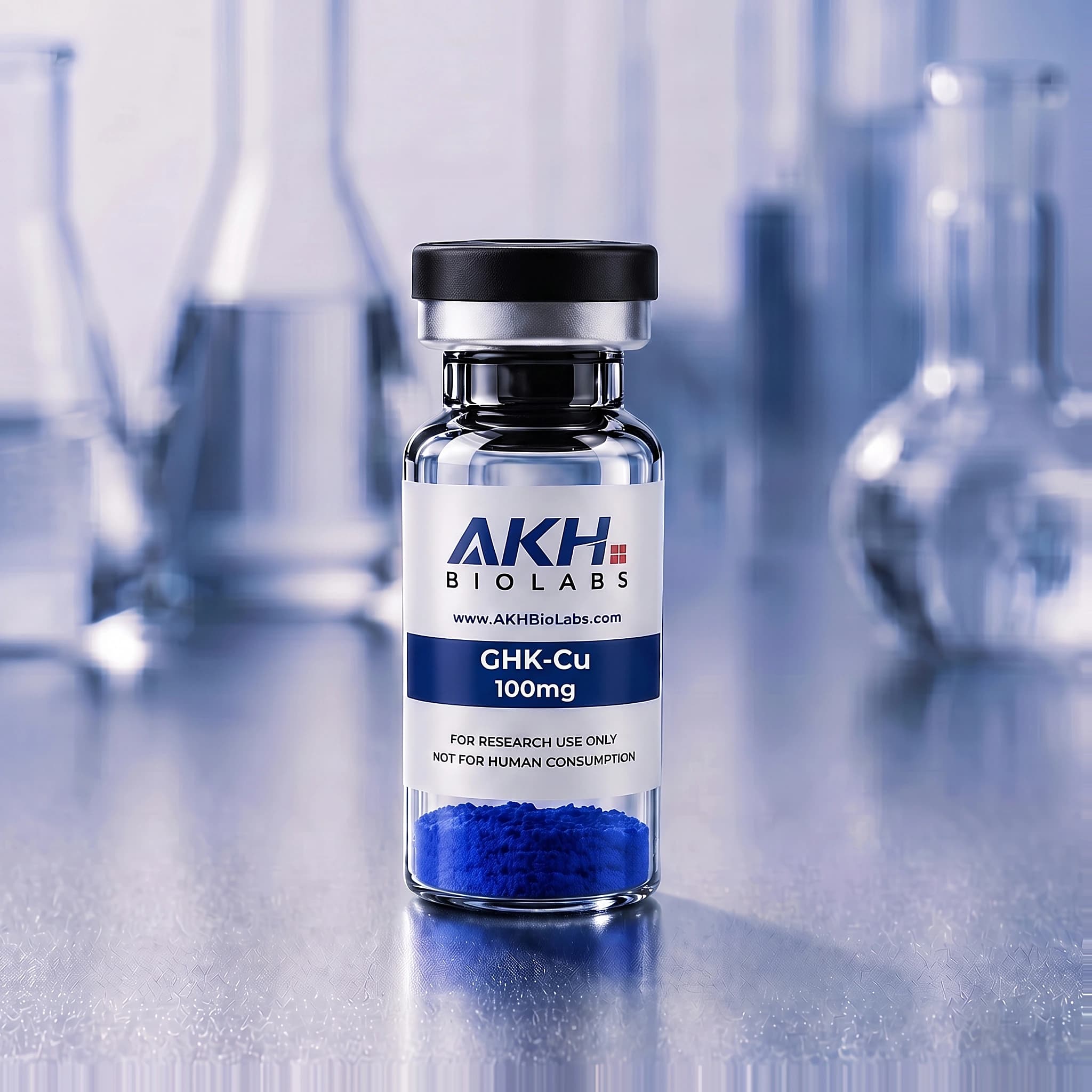
For research and laboratory use only. Not for human consumption.
From the blog
Further reading.
- Research notes
What is TB4 frag? TB4 vs HGH frag explained
TB4 frag is a fragment of thymosin beta-4, the 43-amino-acid actin-sequestering peptide, while HGH frag is a fragment of human growth hormone. The two names describe molecules from different parent proteins, and the resemblance between them is a naming collision rather than shared chemistry.
Read the post - Quality & verification
Third-party vs in-house testing: the lab name is the checkable part
In-house testing and third-party peptide testing differ in exactly one respect — whether the party running the analysis has a commercial stake in the result — and that difference is what independence actually means. Read through one real published AKH batch and the GMP guidance behind the distinction.
Read the post
Recovery