AKH Signature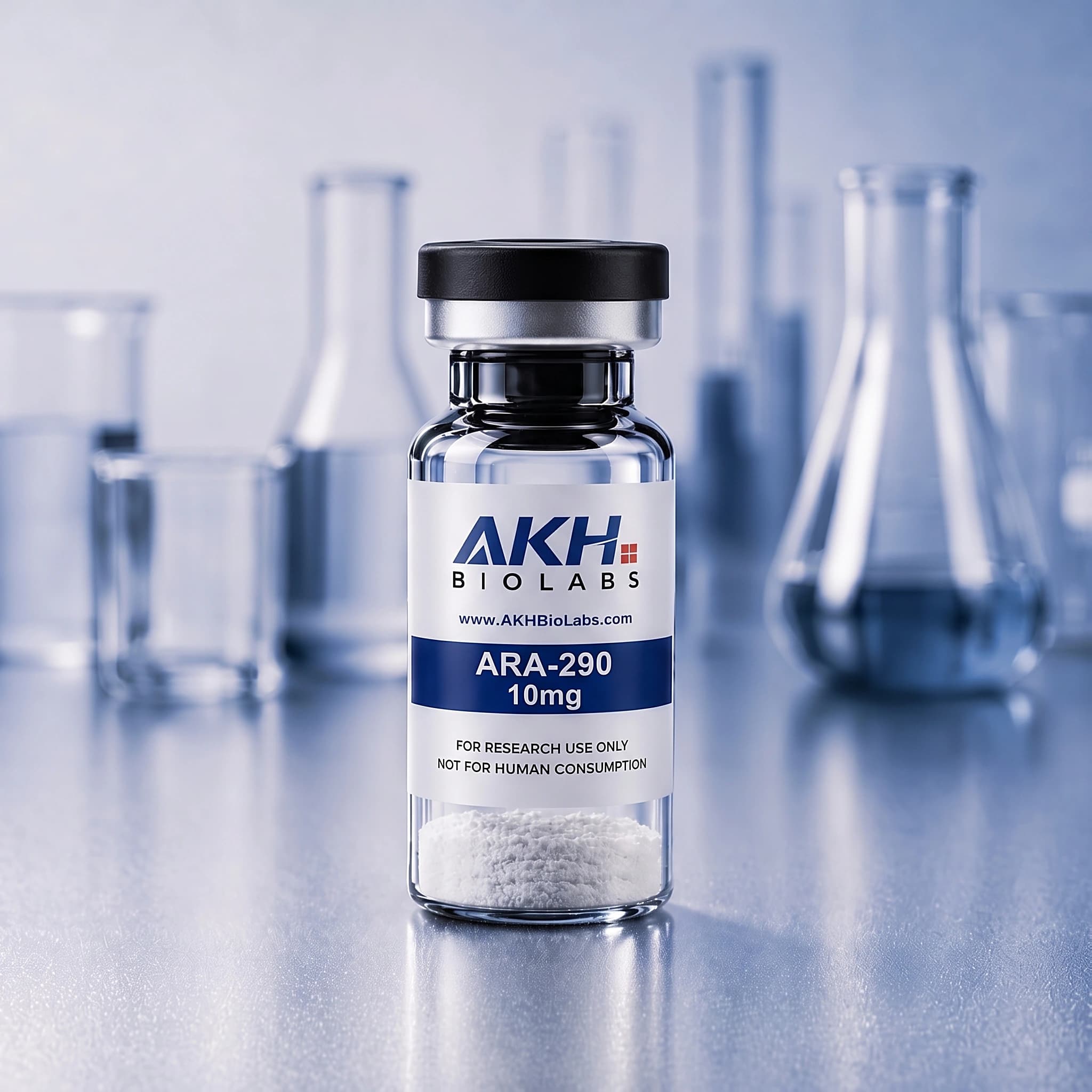
Recovery· AKH Signature
In stockARA-290
Cibinetide
Size10mgPurity99.86%FormulaC51H84N16O21
ARA-290 (cibinetide) is a synthetic 11-amino-acid peptide derived from the helix-B domain of erythropoietin (EPO). Unlike full-length EPO, it binds the innate repair receptor (a heterodimer of EPOR and CD131) without triggering red blood cell production. It is researched for tissue protection, neuropathic pain models and inflammation modulation.
€65
Quantity
HPLC verified
9–14 day shipping
Full COA
Worldwide delivery
About this compound
The research profile.
ARA290 (cibinetide) is an 11-amino-acid peptide engineered from the tertiary structure of erythropoietin. It reproduces the helix B surface of the parent hormone — the region associated with tissue protection — while lacking the residues responsible for erythropoiesis, so the published work reports tissue-protective activity without stimulation of red blood cell production.
Its target is described in the literature as the innate repair receptor, a heteromeric complex of the erythropoietin receptor and the beta-common receptor subunit (CD131) that is expressed on injured or stressed tissue rather than constitutively. This restricted expression pattern is central to how the compound is framed in the research: engagement is reported at sites of injury and inflammation rather than systemically.
Clinical research has concentrated on small nerve fibre pathology, with randomised placebo-controlled studies in sarcoidosis and in type 2 diabetes reporting on corneal nerve fibre measures, neuropathic symptom questionnaires, and metabolic markers. The compound remains investigational and is not an approved medicine.
Published research
15 peer-reviewed studies on ARA290 are summarised in our research library, including 7 published since 2023 — with study designs, reported findings and what the evidence does not establish.
Read the ARA290 evidence baseFor research purposes only. Not for human consumption, diagnosis, treatment, or prevention of any condition.
Categorised as Recovery — Peptides studied in tissue-repair and inflammation models.
Dosing at a glance
What the literature reports.
For research and laboratory use only. Not for human consumption.
Route
Subcutaneous
Frequency
Once daily
Reported range
1–4 mg
Protocol duration
4 weeks (28-day study protocols)
1 mgper administration4 mg
Published randomised studies most commonly investigate ARA290 at 2 mg or 4 mg self-administered subcutaneously once daily for 28 days, with participants then followed for a further month without administration. Preclinical work reports much smaller per-kilogram amounts across a range of injury models.
Ranges reflect protocols reported in the published literature on ARA290 — see research citations.
Calculate a dilutionReconstitution & storage
From powder to solution.
- Step 01
Add 2 ml bacteriostatic water
Aim the stream at the vial wall rather than the powder.
- Step 02
Swirl gently — never shake
Rotate the vial until the solution runs clear. Agitation degrades the peptide.
- Step 03
Refrigerate at 2–8 °C
Reconstituted vials belong in the fridge, protected from direct light.
- Step 04
Use within 28 days
Discard any remainder once the stability window closes.
Lyophilised · −20 °CReconstituted · 2–8 °C, 28 days
A 10 mg vial in 2 ml gives 5 mg/ml. Refrigerate the reconstituted solution at 2–8 °C, protected from light; sealed lyophilised vials are stored at -20 °C.
Reconstitution calculator
10 mg vialmg
ml
mg
2 mg = 2000 mcg
Draw
40units · U-100 insulin syringe
- Concentration
- 5 mg/ml
- Draws per vial
- 5
- Cost per draw
- €13.00
For research and laboratory use only. Not for human consumption.
Laboratory arithmetic for ARA-290 — enter the COA-verified vial content for exact figures. Not medical advice.
Effect timeline
Observed across the research window.
Milestones summarise findings reported in the cited studies. Outcomes vary across models and protocols.
Start
Receptor engagement
Preclinical work describes selective engagement of the innate repair receptor at sites of tissue injury, with the receptor complex reported as upregulated in stressed rather than healthy tissue.
Week 2
Early symptom measures
The randomised pilot study in sarcoidosis recorded questionnaire-based small fibre neuropathy measures across its first weeks of daily administration.
Week 4
28-day study end point
Both the sarcoidosis and type 2 diabetes trials ran daily administration for 28 days, reporting corneal nerve fibre density and questionnaire outcomes at that point.
Week 8
Post-administration follow-up
The diabetes trial followed participants for a further month after administration stopped, reporting measures across the full 56-day observation period.
For research and laboratory use only. Not for human consumption.
Scientific research
The published evidence.
The dosing ranges and timeline milestones on this page summarise the peer-reviewed publications below.
References
- 01
Nonerythropoietic, tissue-protective peptides derived from the tertiary structure of erythropoietin. Proc Natl Acad Sci U S A (2008). PubMed · 18676614
- 02
Safety and efficacy of ARA 290 in sarcoidosis patients with symptoms of small fiber neuropathy: a randomized, double-blind pilot study. Mol Med (2012). PubMed · 23168581
- 03
ARA 290 improves symptoms in patients with sarcoidosis-associated small nerve fiber loss and increases corneal nerve fiber density. Mol Med (2013). PubMed · 24136731
- 04
ARA 290, a nonerythropoietic peptide engineered from erythropoietin, improves metabolic control and neuropathic symptoms in patients with type 2 diabetes. Mol Med (2015). PubMed · 25387363
Laboratory verification
One Certificate, published unaltered.
The Certificate is a test report from a named laboratory outside AKH, ordered by our manufacturer and shown here exactly as the laboratory issued it. A printed copy ships in every parcel.
- Batch
- 26106
- Test date
- 02 Aug 2026
- Task ID
- #1812402
- Purity
- 99.86%
Results
ARA 290: 10mg | Purity: 99.86%
Verified by Brown Institute of Biomolecular Research. Scan the full report for every measurement.
Product FAQ
Questions researchers ask.
Pairs well with
Frequently co-studied.
Compounds that appear alongside ARA-290 in the research literature.
For research and laboratory use only. Not for human consumption.
Recovery