Bestseller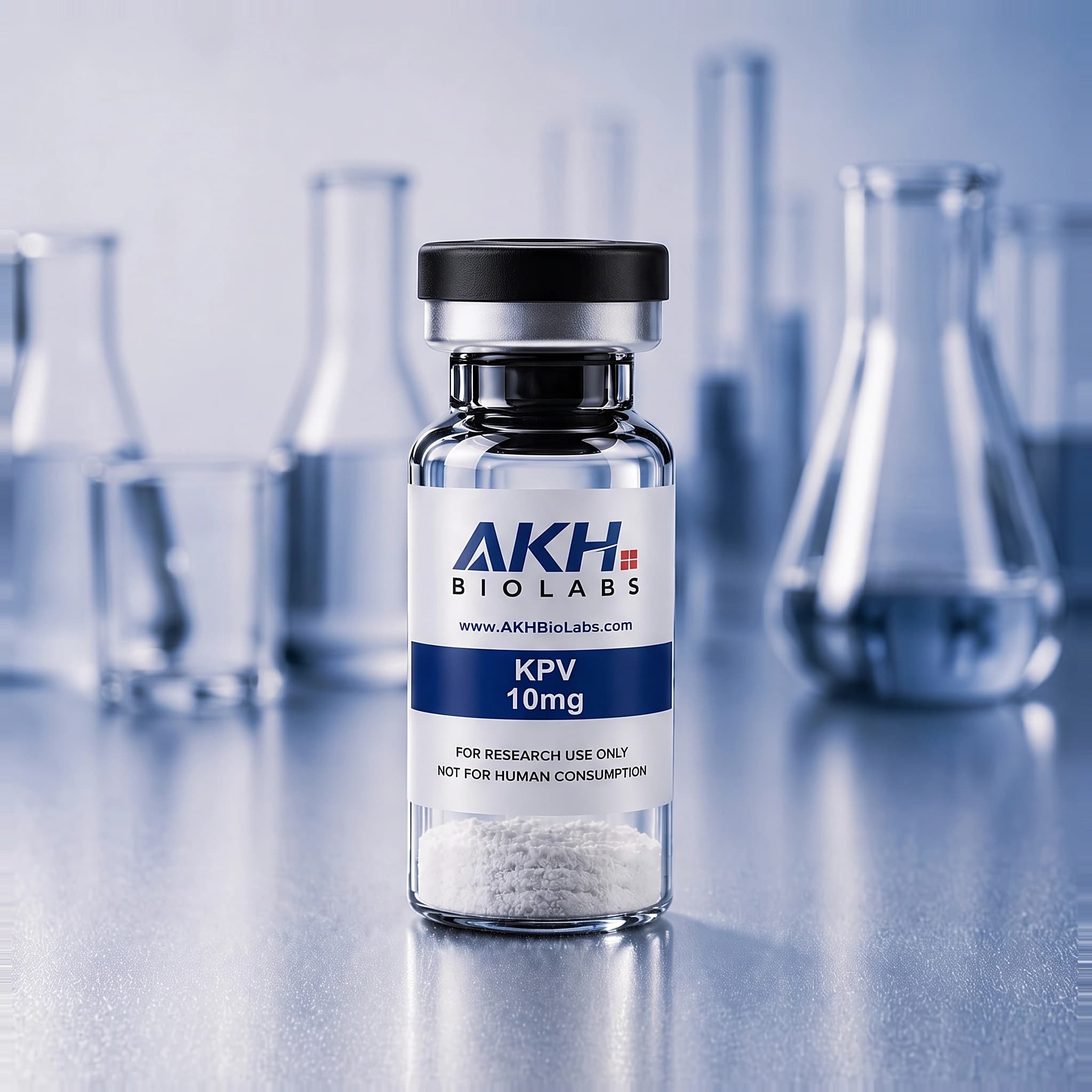
Recovery· Bestseller
In stockKPV
Lysine-Proline-Valine Tripeptide
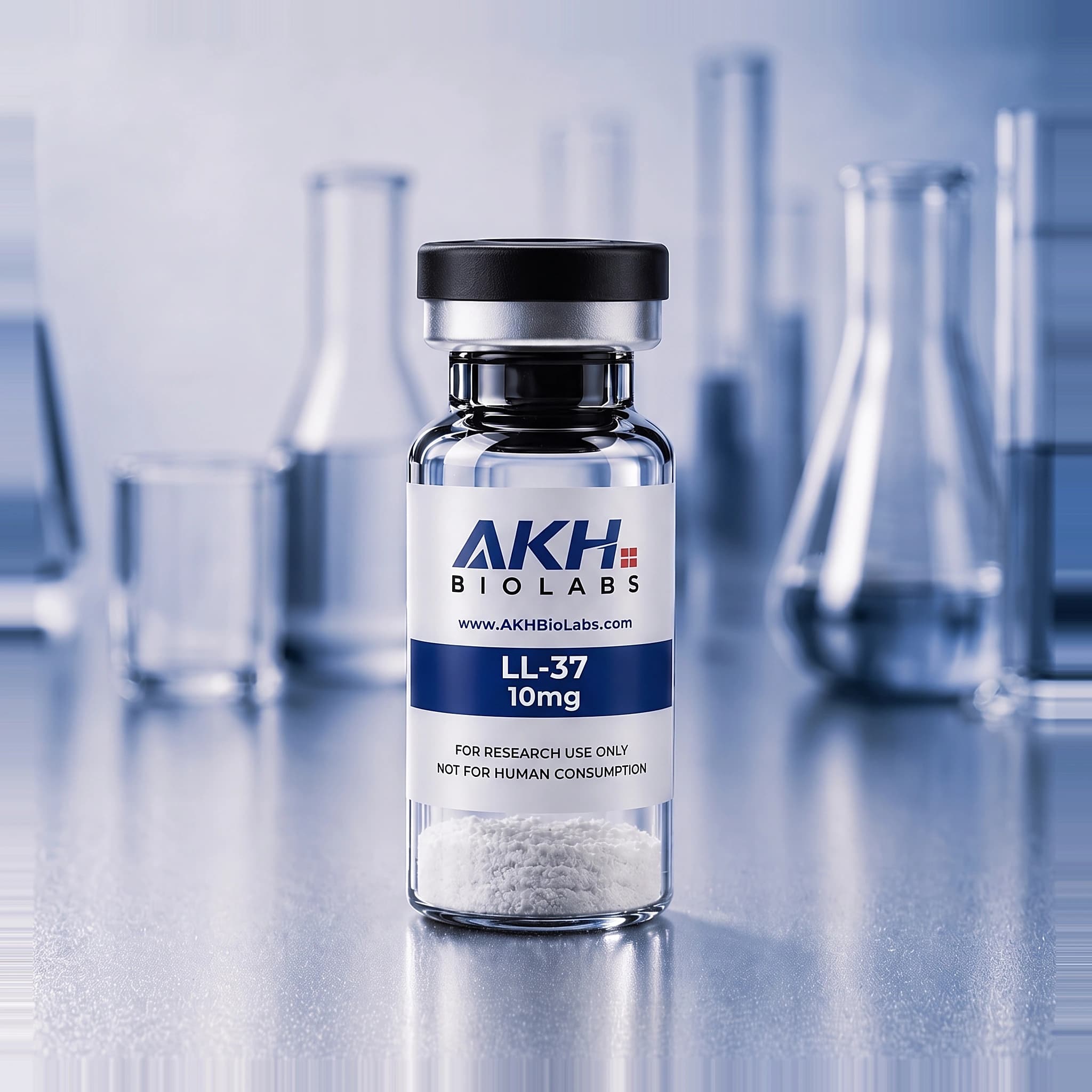
KPV is supplied as 10mg lyophilised powder for laboratory research. Price is shown in your currency, and its Certificate from a named outside laboratory is published on this page. Not for human or veterinary use.
Size10mgPurity99.74%FormulaC16H30N4O5
KPV is the C-terminal three-amino-acid fragment (Lys-Pro-Val) of alpha-melanocyte-stimulating hormone (α-MSH), retaining the parent molecule's anti-inflammatory activity without its pigmentary effects. In preclinical models it is researched for suppression of NF-κB signalling and pro-inflammatory cytokines (TNF-α, IL-1β, IL-6) in gut and skin tissue.
€50
Quantity
HPLC verified
9–14 day shipping
Full COA
Worldwide delivery
About this compound
The research profile.
KPV is the C-terminal tripeptide of alpha-melanocyte-stimulating hormone (lysine–proline–valine, alpha-MSH 11–13). It is the shortest fragment of the parent hormone that retains the anti-inflammatory activity described in the melanocortin literature, and it does so without the pigmentary signalling associated with the full-length hormone.
Mechanistic work reports that nanomolar concentrations of KPV inhibit NF-kappaB and MAP kinase signalling and reduce pro-inflammatory cytokine secretion in intestinal epithelial and immune cells. Transport studies identify the di/tripeptide transporter PepT1 as the route by which KPV enters those cells, which is one reason both oral and parenteral routes appear in the published protocols.
Murine colitis models — dextran sulfate sodium and TNBS induced — are the most frequently reported setting, with review literature placing KPV within the wider class of alpha-MSH-derived peptides investigated for immune-mediated inflammatory conditions and for effects observed in skin and mucosal tissue models.
Published research
15 peer-reviewed studies on KPV are summarised in our research library, including 6 published since 2023 — with study designs, reported findings and what the evidence does not establish.
Read the KPV evidence baseFor research purposes only. Not for human consumption, diagnosis, treatment, or prevention of any condition.
Categorised as Recovery — Peptides studied in tissue-repair and inflammation models.
Dosing at a glance
What the literature reports.
For research and laboratory use only. Not for human consumption.
Route
Subcutaneous
Frequency
Once daily
Reported range
200–500 mcg
Protocol duration
2–4 weeks
200 mcgper administration500 mcg
Oral · Once daily (study protocols) · 200–500 mcg per administration · 1–2 weeks in colitis models
Murine studies report KPV on a per-kilogram basis, and the cell work that defines its signalling profile operates at nanomolar concentrations. The 200–500 mcg per-administration figures shown reflect the amounts described in laboratory protocol summaries for a 10 mg vial.
Ranges reflect protocols reported in the published literature on KPV — see research citations.
Calculate a dilutionReconstitution & storage
From powder to solution.
- Step 01
Add 2 ml bacteriostatic water
Aim the stream at the vial wall rather than the powder.
- Step 02
Swirl gently — never shake
Rotate the vial until the solution runs clear. Agitation degrades the peptide.
- Step 03
Refrigerate at 2–8 °C
Reconstituted vials belong in the fridge, protected from direct light.
- Step 04
Use within 28 days
Discard any remainder once the stability window closes.
Lyophilised · −20 °CReconstituted · 2–8 °C, 28 days
Reconstituted solution is kept refrigerated at 2–8 °C and protected from light; sealed lyophilised vials are stored at -20 °C.
Reconstitution calculator
10 mg vialmg
ml
mcg
250 mcg = 0.25 mg
Draw
5units · U-100 insulin syringe
- Concentration
- 5 mg/ml
- Draws per vial
- 40
- Cost per draw
- €1.25
For research and laboratory use only. Not for human consumption.
Laboratory arithmetic for KPV — enter the COA-verified vial content for exact figures. Not medical advice.
Effect timeline
Observed across the research window.
Milestones summarise findings reported in the cited studies. Outcomes vary across models and protocols.
Start
Transport and signalling
Cell studies report PepT1-mediated uptake and suppression of NF-kappaB and MAP kinase activation at nanomolar concentrations, observable within hours of exposure.
Week 1
Model-level inflammatory markers
In murine colitis models, cytokine expression and myeloperoxidase activity are the measures most commonly reported to change over the first week of administration.
Week 2
Histological measures
Studies describe reduced inflammatory infiltrate on histology at the two-week mark relative to untreated controls, alongside earlier recovery of bodyweight in treated animals.
Week 4
Protocol end points
Review literature summarising alpha-MSH-derived peptides notes that most published protocols run to roughly four weeks before end-point comparisons are drawn.
For research and laboratory use only. Not for human consumption.
Scientific research
The published evidence.
The dosing ranges and timeline milestones on this page summarise the peer-reviewed publications below.
References
- 01
Antiinflammatory activity of a COOH-terminal fragment of the neuropeptide alpha-MSH. FASEB J (1989). PubMed · 2550304
- 02
PepT1-mediated tripeptide KPV uptake reduces intestinal inflammation. Gastroenterology (2008). PubMed · 18061177
- 03
Melanocortin-derived tripeptide KPV has anti-inflammatory potential in murine models of inflammatory bowel disease. Inflamm Bowel Dis (2008). PubMed · 18092346
- 04
Alpha-melanocyte-stimulating hormone and related tripeptides: biochemistry, antiinflammatory and protective effects in vitro and in vivo, and future perspectives for the treatment of immune-mediated inflammatory diseases. Endocr Rev (2008). PubMed · 18612139
Laboratory verification
One Certificate, published unaltered.
The Certificate is a test report from a named laboratory outside AKH, ordered by our manufacturer and shown here exactly as the laboratory issued it. A printed copy ships in every parcel.
- Batch
- 26088
- Test date
- 08 Aug 2026
- Task ID
- #1812384
- Purity
- 99.74%
Results
KPV: 10mg | Purity: 99.74%
Verified by Brown Institute of Biomolecular Research. Scan the full report for every measurement.
Product FAQ
Questions researchers ask.
Pairs well with
Frequently co-studied.
Compounds that appear alongside KPV in the research literature.
For research and laboratory use only. Not for human consumption.
Recovery