Amino Asylum alternatives: what to check in a new shop
Amino Asylum closed in June 2025 and its own site states that no website is authorised to represent it; this guide sets out the checkable facts a replacement shop should publish before payment.
The search for an amino asylum alternative follows a closure that the shop itself announced: the Amino Asylum site states that the company permanently closed in June 2025, and a saved account records that the store went dark on June 17, 2025. The same closure notice states that no website is authorised to represent Amino Asylum, sell its products or collect personal information on its behalf. A replacement shop is therefore judged on what it publishes, not on the name it borrows, and the shop page is where a catalogue of products with their own published certificates can be read.
This article is written for research buyers comparing replacement sellers. It covers what the closure pages say, the fields a replacement shop should publish, how to read one certificate example, and where the evidence records for the compounds Amino Asylum sold now sit.
Key takeaways
- Amino Asylum permanently closed in June 2025 according to its own site, which also states that no website is authorised to represent it or collect payment on its behalf.
- A replacement shop should publish, for the exact product, a certificate that names the laboratory, batch, test date and results.
- The batch number is the field that ties a certificate to a vial; a purity percentage is a chromatographic result, not the share of vial mass.
- A saved account of Amino Asylum reports 15 samples tested in early 2025, with seven passing and eight failing, and notes that batch numbers were often missing.
- AKH BioLabs publishes one certificate for each product from a named outside laboratory, ordered by the manufacturer, and states worldwide shipping in 9 to 14 days.
What happened to Amino Asylum
Both saved pages agree on the central fact. The Amino Asylum site states that the company permanently closed in June 2025, and a secondary account records that the store went dark on June 17, 2025. The shop page does not give a reason; it is a closure notice and a warning about the name. It states that no website is authorised to represent Amino Asylum, sell its products or collect personal information on its behalf, and that the company no longer accepts payments through any website, person or entity.
Those statements are the useful part for a buyer: the original shop is not trading, and a live listing under the name is not the original business. The secondary account adds that sites reusing the name appeared after the closure. For a buying decision, the cause of the closure is less important than the status, and the status is stated plainly on the shop's own page.
What amino asylum alternatives should publish
A replacement shop is only as checkable as the documents it publishes. The point is not to find a shop with the same name or the same product mix; it is to find one whose claims can be read before payment and compared with the vial on arrival. The following fields carry the most information.
A shop that publishes none of these is not necessarily unsafe, but there is nothing to check. A shop that publishes all six gives a buyer a set of statements that can be compared with the vial on arrival. The saved account of Amino Asylum is relevant here: it reports 15 samples across eight peptides tested in February and March 2025, with seven passing and eight failing, and it notes that batch numbers were often missing. A missing batch number is a missing link between a report and a container.
- 01
Product-specific certificate
The report should name the exact product and the fill. A certificate for a different product or a blend is not a substitute.
- 02
Named laboratory
The issuing laboratory should be identifiable. AKH BioLabs states that each product has one certificate from a named laboratory outside AKH, ordered by the manufacturer.
- 03
Batch number and test date
The batch number is the field that ties the document to the container. The test date places the measurement in time.
- 04
Results line
The measured result should be stated for the batch, including the purity figure and the stated fill where the report gives one.
- 05
Shipping window
The shop should state where it ships and give a delivery window rather than a vague promise. AKH BioLabs states worldwide shipping in 9 to 14 days.
- 06
Research-use-only statement
The listing should state that the material is for laboratory research and not for human or veterinary use.
Reading one certificate example
One certificate makes the reading concrete. The KPV page lists the product at 10mg with a stated purity of 99.74% and states that a certificate from a named outside laboratory is published there, with a Full COA available. KPV is supplied as a 10mg lyophilised powder for laboratory research.
Three limits follow. First, the purity figure is a chromatographic result. The research record notes that lyophilised peptide is normally supplied as an acetate or trifluoroacetate salt and carries residual water, so the mass of powder in a vial is not the same quantity as the molecular weight would suggest, and chromatographic purity does not resolve that difference. Second, the certificate covers one batch. It does not describe a product line or a second batch. Third, a certificate reports analytical measurements for that batch, not a clinical use or a regulatory status. The checkable link is the batch number: a certificate with a high purity figure but a batch that does not match the vial describes different material.
Amino Asylum products and their evidence records
The products named in the saved Amino Asylum material map onto public evidence records rather than a single replacement list. Melanotan II has a research record covering melanocortin receptor pharmacology and the case-report literature. BPC-157 has a record covering tendon, ligament, muscle and gut models. CJC-1295 has a record that separates the DAC and no-DAC forms. TB-500 has a record covering thymosin beta-4 and the fragment. KPV has a record covering the tripeptide and its preclinical gut work.
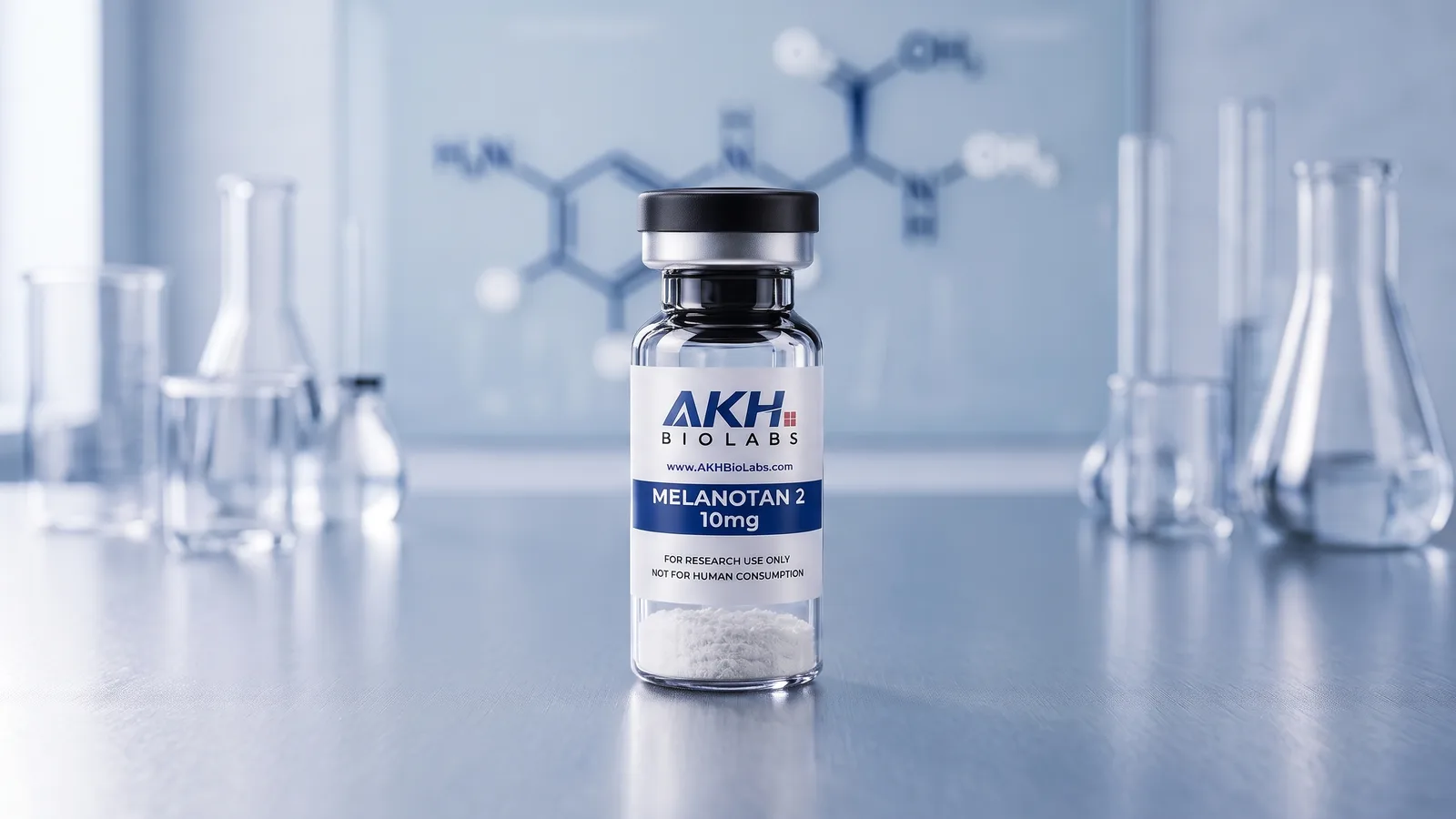
The catalogue pages carry the certificates for the exact product. The Melanotan 2 page, the BPC-157 page, the CJC-1295 page and the TB-500 page each publish a certificate from a named outside laboratory, and the KPV page states that a certificate from a named outside laboratory is published there. None of this is a buying recommendation, and a certificate does not change a compound's regulatory position.
Choosing a replacement: the checkable next step
The first step is to open the shop page and choose the exact product, not a category or a blend. The second is to open that product's certificate and read the four fields that matter: compound, batch, laboratory and test date. The third is to compare the batch number with the vial on arrival.
AKH BioLabs states that each product has one certificate from a named outside laboratory, published on its product page, and that orders ship worldwide in 9 to 14 days. Those are checkable statements.
Common questions.
- Is Amino Asylum still trading?
No. Its own site states that Amino Asylum permanently closed in June 2025, and a secondary account records that the store went dark on June 17, 2025. The shop page also states that no website is authorised to represent Amino Asylum, sell its products or collect personal information on its behalf. A listing using the name is not the original business.
- Which fields make a replacement shop's certificate checkable?
Four fields carry the most weight: the compound and fill named on the report, the laboratory that issued it, the batch number and test date, and the results line. A product-specific certificate with a named laboratory and a matching batch number is checkable. A generic certificate, or one without a batch number, is not tied to a container.
- Is a certificate purity percentage the same as peptide content by mass?
No. A certificate reports chromatographic purity, which does not resolve the difference between powder mass and peptide mass. It does not describe the share of vial mass that is the peptide. Lyophilised peptide is normally supplied as an acetate or trifluoroacetate salt and carries residual water, so the mass of powder in a vial is not the same quantity as the molecular weight would suggest.
- What does a research-use-only label mean on a peptide listing?
It is an intended-use statement. The listing states that the material is for laboratory research and not for human or veterinary use. That statement sits alongside the certificate rather than replacing it: the label gives the category of supply, and the certificate gives measurements for a batch.