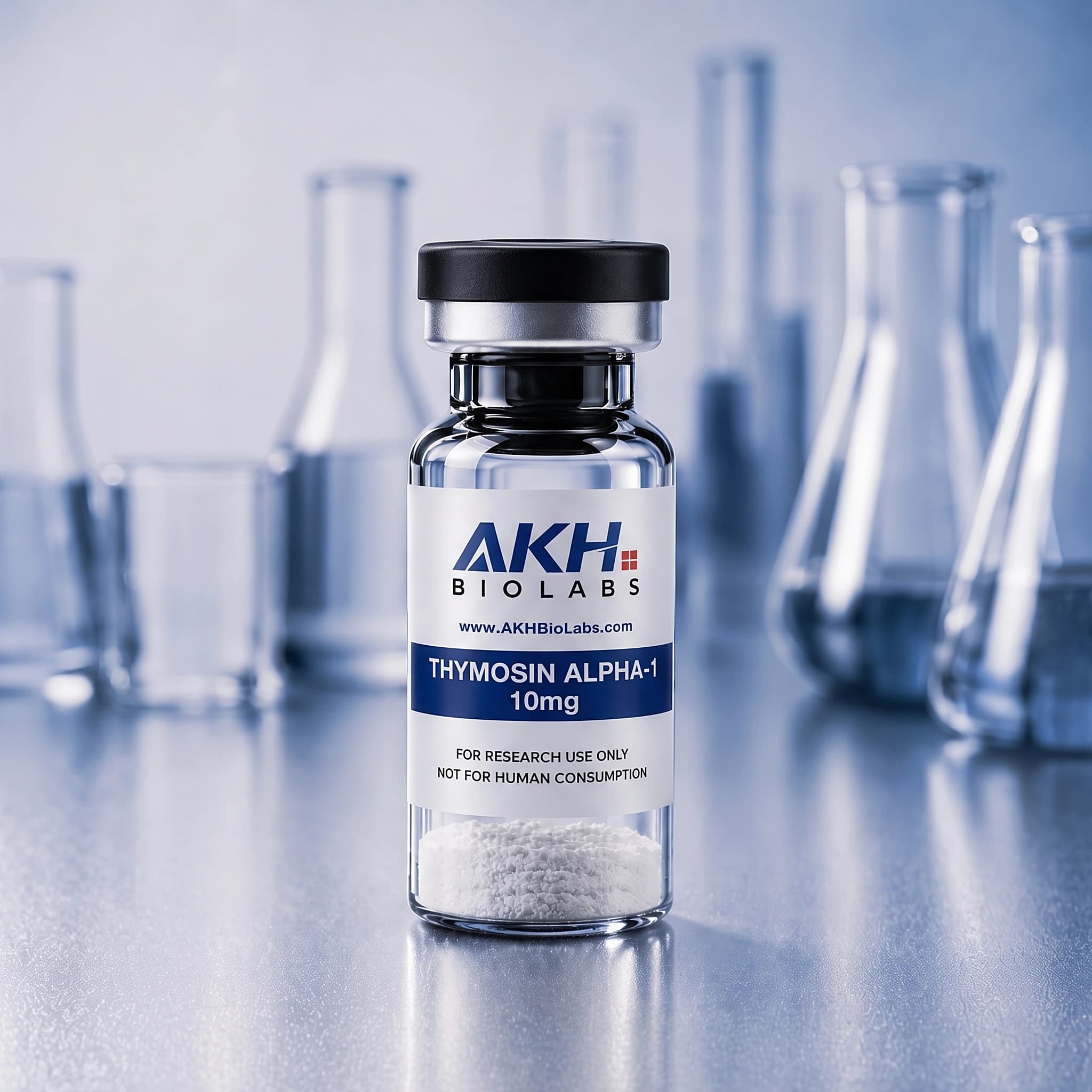
Premium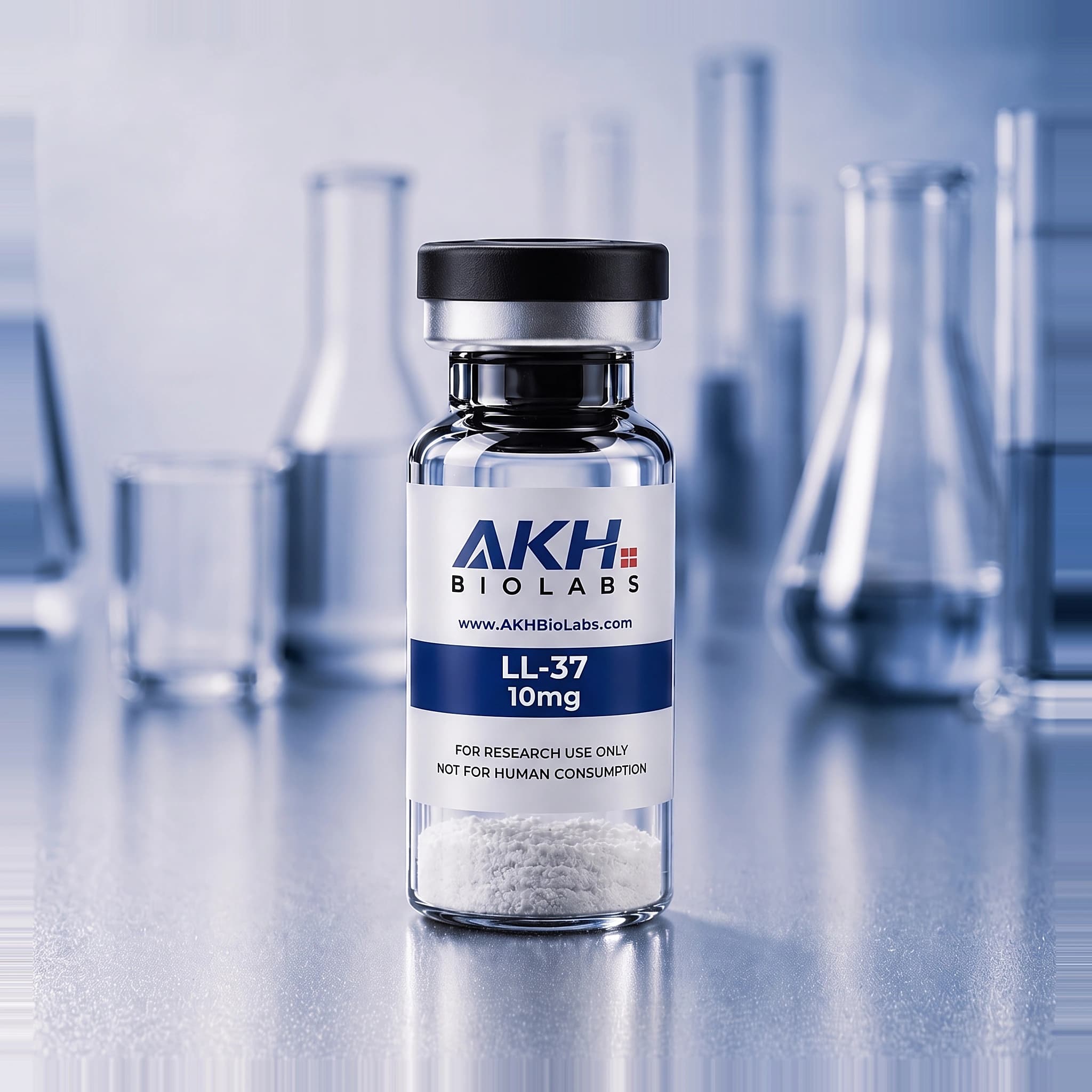
Longevity· Premium
Only 4 leftLL-37
Human Cathelicidin Antimicrobial Peptide
Size10mgPurityCertificate pendingFormulaC205H340N60O53
LL-37 is the only human cathelicidin antimicrobial peptide — a 37-amino-acid amphipathic helix released from the hCAP18 precursor by neutrophils and epithelial cells. It is researched for direct membrane disruption of bacteria, biofilm interference and cytokine modulation, making it a key probe in innate-immunity and wound-repair studies.
€65
Quantity
9–14 day shipping
Certificate pending
Worldwide delivery
About this compound
The research profile.
LL-37 is the only cathelicidin-derived antimicrobial peptide found in humans. It is released by extracellular proteolytic cleavage from hCAP-18, the precursor stored in neutrophil granules and expressed by epithelial cells, and takes its name from the two leading leucines and its 37-residue length. The peptide is cationic and amphipathic, folding into an alpha helix on contact with anionic membranes.
Its best-characterised activity is direct membrane disruption of bacteria, but the review literature treats that as only part of the picture. LL-37 also acts as a host-defence signalling molecule: it binds and neutralises lipopolysaccharide, engages formyl peptide receptor-like 1 to recruit leukocytes, and modulates the response of epithelial and immune cells to microbial products. Reviews describe context-dependent behaviour, with both pro- and anti-inflammatory outcomes reported depending on concentration and tissue.
A separate strand of work examines the peptide in tissue-repair models. Studies report angiogenic activity attributed to endothelial receptor engagement, and wound-healing experiments in mice — using adenoviral delivery, topical synthetic peptide, and recombinant peptide — describe changes in vascularisation and re-epithelialisation relative to controls. These remain preclinical observations in animal and culture systems.
Published research
17 peer-reviewed studies on LL-37 are summarised in our research library, including 13 published since 2023 — with study designs, reported findings and what the evidence does not establish.
Read the LL-37 evidence baseFor research purposes only. Not for human consumption, diagnosis, treatment, or prevention of any condition.
Categorised as Longevity — Compounds for cellular-ageing and immune research.
Dosing at a glance
What the literature reports.
For research and laboratory use only. Not for human consumption.
Route
Subcutaneous
Frequency
Once daily (study protocols)
Reported range
50–125 mcg
Protocol duration
Short preclinical courses, commonly under two weeks
50 mcgper administration125 mcg
Preclinical protocols work in the microgram range, with the cited wound-healing studies applying synthetic or recombinant peptide locally rather than systemically. The 50–125 mcg band describes the per-administration amounts that recur across that preclinical work; no clinical dosing standard exists for this peptide.
Ranges reflect protocols reported in the published literature on LL-37 — see research citations.
Calculate a dilutionReconstitution & storage
From powder to solution.
- Step 01
Add 3 ml bacteriostatic water
Aim the stream at the vial wall rather than the powder.
- Step 02
Swirl gently — never shake
Rotate the vial until the solution runs clear. Agitation degrades the peptide.
- Step 03
Refrigerate at 2–8 °C
Reconstituted vials belong in the fridge, protected from direct light.
- Step 04
Use within 28 days
Discard any remainder once the stability window closes.
Lyophilised · −20 °CReconstituted · 2–8 °C, 28 days
A 10 mg vial in 3 ml of bacteriostatic water gives a 3.33 mg/ml solution, so 100 mcg measures 0.03 ml — 3 units on a U-100 syringe, which a 0.3 ml syringe reads more precisely. LL-37 is a cationic peptide that adsorbs to plastic and glass — reconstitute gently, avoid vigorous agitation, and keep lyophilised vials at -20 °C.
Reconstitution calculator
10 mg vialmg
ml
mcg
100 mcg = 0.1 mg
Draw
3units · U-100 insulin syringe
Draws under 5 units are difficult to measure accurately. More bacteriostatic water gives a longer, easier draw.
- Concentration
- 3.33 mg/ml
- Draws per vial
- 100
- Cost per draw
- €0.65
For research and laboratory use only. Not for human consumption.
Laboratory arithmetic for LL-37 — enter the COA-verified vial content for exact figures. Not medical advice.
Effect timeline
Observed across the research window.
Milestones summarise findings reported in the cited studies. Outcomes vary across models and protocols.
Immediate
Membrane interaction
Biophysical work describes the peptide adopting its helical conformation on contact with anionic membranes and disrupting them within minutes, the activity that first characterised the cathelicidin family.
Hours
Host-defence signalling
Reviews describe lipopolysaccharide neutralisation and formyl peptide receptor-like 1 engagement recruiting leukocytes over a timescale of hours, separate from any direct antimicrobial effect.
Days 1–7
Angiogenic and re-epithelialisation measures
In murine excisional wound models, investigators reported increased vascularisation and re-epithelialisation following local delivery of synthetic or recombinant peptide compared with controls.
Study end point
Vessel formation end points
Angiogenesis work assessed endothelial proliferation and vessel formation as terminal end points, attributing the effect to endothelial receptor engagement rather than to antimicrobial activity.
For research and laboratory use only. Not for human consumption.
Scientific research
The published evidence.
The dosing ranges and timeline milestones on this page summarise the peer-reviewed publications below.
References
- 01
LL-37, the only human member of the cathelicidin family of antimicrobial peptides. Biochim Biophys Acta (2006). PubMed · 16716248
- 02
A comprehensive summary of LL-37, the factotum human cathelicidin peptide. Cell Immunol (2012). PubMed · 23246832
- 03
An angiogenic role for the human peptide antibiotic LL-37/hCAP-18. J Clin Invest (2003). PubMed · 12782669
- 04
In vitro and in vivo wound healing-promoting activities of human cathelicidin LL-37. J Invest Dermatol (2008). PubMed · 17805349
- 05
Wound healing activity of the human antimicrobial peptide LL37. Peptides (2011). PubMed · 21693141
Laboratory verification
Certificate pending.
The Certificate is a test report from a named laboratory outside AKH, ordered by our manufacturer and shown here exactly as the laboratory issued it. A printed copy ships in every parcel.
No matching report from an outside laboratory has been published for this product yet, so no purity figure is claimed. The Certificate will appear here unaltered once it is.
Product FAQ
Questions researchers ask.
Pairs well with
Frequently co-studied.
Compounds that appear alongside LL-37 in the research literature.
For research and laboratory use only. Not for human consumption.
Longevity