Premium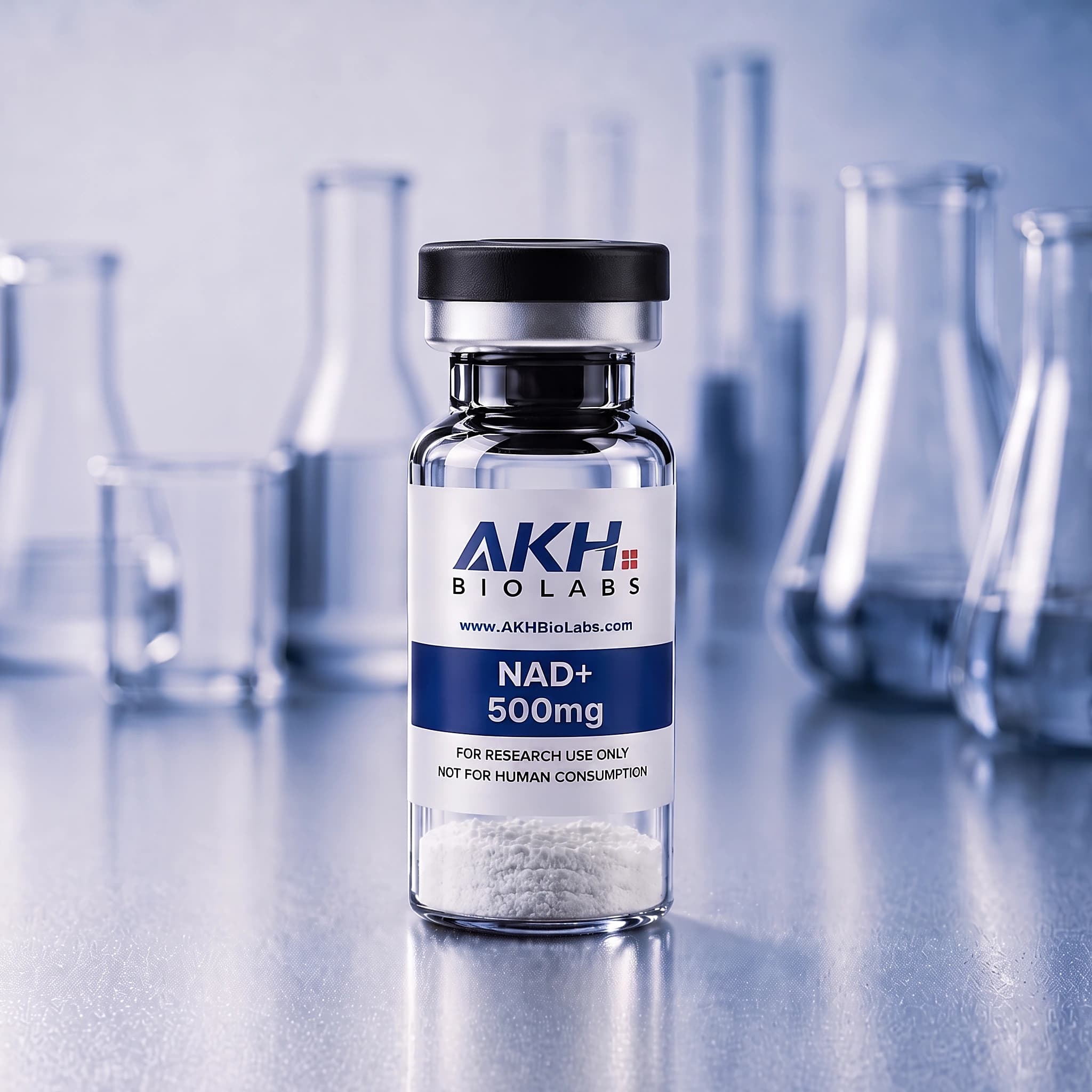
Performance· Premium
In stockNAD+
Nicotinamide Adenine Dinucleotide
Size
500mg€601000mg€107
Purity99.78%FormulaC21H27N7O14P2
NAD+ (nicotinamide adenine dinucleotide) is a coenzyme present in every living cell and central to how cells convert nutrients into energy. It is researched as an electron carrier in mitochondrial respiration and as the substrate sirtuins and PARP enzymes use during DNA repair — pathways that decline with age and underpin much of modern longevity research.
€60
Quantity
HPLC verified
9–14 day shipping
Full COA
Worldwide delivery
About this compound
The research profile.
Nicotinamide adenine dinucleotide (NAD+) is a pyridine dinucleotide present in every cell, where it serves as the hydride acceptor for the redox reactions of glycolysis, the tricarboxylic acid cycle, and oxidative phosphorylation. Beyond that classical redox role, it is the obligatory co-substrate for three families of NAD+-consuming enzymes — the sirtuins, the poly(ADP-ribose) polymerases, and the CD38/CD157 ectoenzymes — which cleave the molecule and therefore draw continuously on the cellular pool.
Because consumption and synthesis run in parallel, tissue NAD+ concentration is treated in the literature as a dynamic set point rather than a fixed quantity. Reviews describe a gradual decline in tissue and cellular NAD+ across ageing in multiple model organisms, attributed in part to rising CD38 activity in senescent-cell-associated macrophages and in part to reduced salvage-pathway flux. This observation is what motivates the large body of work on precursor and direct-NAD+ administration.
Pharmacokinetic work in humans is comparatively sparse. A pilot study tracking the plasma and urine NAD+ metabolome during a six-hour intravenous infusion reported no measurable change in plasma NAD+ or its metabolites until after the two-hour mark, with the majority of administered material appearing in urine as metabolites — a finding frequently cited when comparing direct NAD+ administration against oral precursor strategies.
Published research
15 peer-reviewed studies on NAD+ are summarised in our research library, including 11 published since 2023 — with study designs, reported findings and what the evidence does not establish.
Read the NAD+ evidence baseFor research purposes only. Not for human consumption, diagnosis, treatment, or prevention of any condition.
Categorised as Performance — Mitochondrial and cellular-energy research compounds.
Scientific research
The published evidence.
The peer-reviewed publications below characterise NAD+ across discovery, pharmacology, and clinical development.
References
- 01
A Pilot Study Investigating Changes in the Human Plasma and Urine NAD+ Metabolome During a 6 Hour Intravenous Infusion of NAD+. Front Aging Neurosci (2019). PubMed · 31572171
- 02
Therapeutic Potential of NAD-Boosting Molecules: The In Vivo Evidence. Cell Metab (2018). PubMed · 29514064
- 03
NAD+ metabolism and its roles in cellular processes during ageing. Nat Rev Mol Cell Biol (2021). PubMed · 33353981
- 04
Nicotinamide Adenine Dinucleotide Augmentation in Overweight or Obese Middle-Aged and Older Adults: A Physiologic Study. J Clin Endocrinol Metab (2023). PubMed · 36740954
Laboratory verification
One Certificate, published unaltered.
The Certificate is a test report from a named laboratory outside AKH, ordered by our manufacturer and shown here exactly as the laboratory issued it. A printed copy ships in every parcel.
- Batch
- 26152
- Test date
- 31 Jul 2026
- Task ID
- #1812448
- Purity
- 99.78%
Results
NAD+: 500mg | Purity: 99.78%
Verified by Brown Institute of Biomolecular Research. Scan the full report for every measurement.
Product FAQ
Questions researchers ask.
Pairs well with
Frequently co-studied.
Compounds that appear alongside NAD+ in the research literature.
For research and laboratory use only. Not for human consumption.
Performance